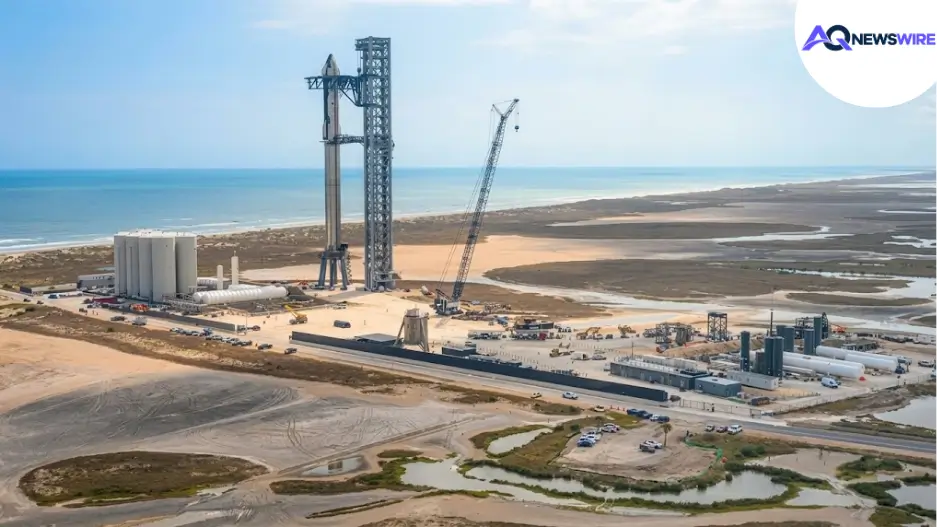
Federal regulators have initiated a comprehensive evaluation into proposals that would dramatically accelerate launch operations at SpaceX’s Starbase facility on the South Texas coast. The ongoing review, spearheaded by the Federal Aviation Administration (FAA) alongside partner environmental agencies, examines the broad impacts of transitioning the site from experimental testing into a high-tempo industrial launch hub.
At the center of the inquiry is whether regional infrastructure, coastal ecosystems, and public airspace can accommodate the massive logistical and environmental footprint required by round-the-clock orbital operations.
Redefining the Scale of Orbital Spaceflight
Since establishing operations outside Brownsville, Texas, SpaceX has treated the Boca Chica facility as the proving ground for its next-generation launch system. Starship and its Super Heavy booster constitute the largest and most powerful flying rocket architecture ever built. However, realizing Elon Musk’s long-term vision—ferrying cargo and human crews to Mars, establishing permanent lunar infrastructure, and rapidly replenishing megaconstellations in low-Earth orbit—demands flight frequencies unprecedented in modern aerospace history.
To reach that operational threshold, SpaceX needs regulatory clearance to expand beyond occasional test flights into a continuous cadence of liftoffs, booster recovery catches, and orbital tanker missions. A high-tempo schedule would see launch mounts cycled almost constantly, turning Cameron County into the primary gateway for ultra-heavy orbital deployment.
Achieving that pace requires more than vehicle readiness: it demands extensive regulatory restructuring, expanded fuel production facilities, upgraded water deluge cooling installations, and continuous operational clearances across federal boundaries.
The Core Regulatory Hurdles
The federal review scrutinizes several interlocking factors that determine whether high-volume spaceport operations can coexist with nearby public and federal resources:
Commercial Airspace Management: Coordinating hundreds of airspace windows along the Gulf of Mexico necessitates close alignment with commercial aviation. Frequent temporary flight restrictions (TFRs) affect domestic and transatlantic air corridors, requiring optimized trajectory management to minimize disruptions across North American flight schedules.
Acoustic & Sonic Boom Footprints: The Super Heavy booster generates tens of millions of pounds of thrust, producing severe acoustic pressure waves upon ascent and dual sonic booms during recovery maneuvers. The FAA must quantify the cumulative vibration and noise load on nearby settlements like South Padre Island and Port Isabel.
Coastal Ecosystems and Protected Lands: The launch complex directly borders sensitive public lands, including the Boca Chica State Park and the Lower Rio Grande Valley National Wildlife Refuge. Biologists and conservation bodies are assessing risks to migratory birds, Kemp's ridley sea turtles, and coastal wetlands from thermal runoff, sound dampening runoff, and debris containment protocols.
Industry Stakes and Strategic Priorities
For SpaceX, unlocking rapid turnaround at Starbase is a strategic necessity. The company holds multi-billion-dollar commitments under NASA’s Artemis program to deliver human landing systems for upcoming lunar landings. Because a single deep-space lunar or Martian voyage requires multiple Starship launches merely to conduct orbital propellant transfers, flight volume is directly tied to mission viability.
A capped or restricted cadence in Texas forces a heavier reliance on facilities in Florida, where SpaceX is simultaneously developing pads at Cape Canaveral. Nevertheless, the Texas spaceport remains the sole complex fully owned and operated directly by the company, granting it unmatched developmental autonomy—provided federal licenses keep pace with engineering iterations.
Community and Economic Perspectives
Locally, the rapid transformation of the Rio Grande Valley has generated contrasting viewpoints. Municipal leaders emphasize the economic renaissance brought by thousands of advanced manufacturing, engineering, and construction jobs, alongside increased tax revenue and capital investment across Cameron County.
Conversely, local residents, Indigenous groups, and environmental coalitions argue that constant beach closures, highway diversions along State Highway 4, and persistent structural vibrations disrupt quality of life and public coastal access.
The FAA’s assessment will incorporate findings under the National Environmental Policy Act (NEPA) and the Endangered Species Act. The outcome will determine whether SpaceX receives modified operator licenses outright or must institute stricter operational mitigations, noise barriers, and launch caps before advancing to its next operational chapter.