

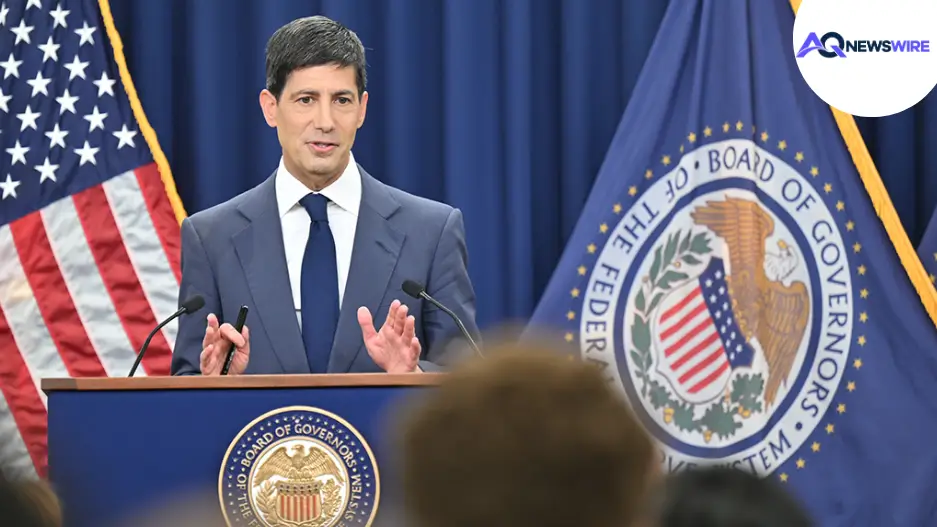
Just when it felt like the worst of the inflation storm was in the rearview mirror, ordinary Americans are sending a very clear message: don’t get comfortable.
According to the Federal Reserve Bank of New York’s latest consumer survey, short-term inflation expectations didn’t just tick up—they surged to levels we haven't seen since May 2023. While Wall Street and Washington have spent months arguing over whether the economy has pulled off a "soft landing," people paying the bills at the kitchen table are bracing for things to get noticeably more expensive over the next 12 months.
It’s a sharp reality check for the central bank, and it shows that cooling down official government spreadsheets is one thing; convincing real people that life is affordable again is something else entirely.
The Everyday Squeeze
The anxiety isn't about luxury items or abstract economic metrics. It’s about the basics you can't avoid paying for: groceries, gas, rent, utilities, and healthcare.
In the latest survey, respondents flagged every one of those categories as major trouble spots for the year ahead. Gas prices have been bouncing around unpredictably, and shelter costs simply refuse to come down to earth, driven by a stubborn housing shortage that keeps rent and home prices pinned at eye-watering levels.
Unsurprisingly, lower- and middle-income families are feeling the burn the most. If you're spending half your paycheck just to keep the fridge stocked and the tank full, even a 20-cent jump in eggs or a 10-cent hike at the pump feels like a direct hit. The broader inflation rate may be down from its pandemic-era highs, but cumulative prices haven't gone backward. People are still paying 2024 and 2025 prices on wages that haven't always kept pace.
As Jonathan Miller, chief macroeconomic strategist at Vanguard Economic Insights, put it: "Consumers aren't reading the Fed's white papers; they're reading the receipt at the checkout counter. Even small bumps in daily essentials immediately set off alarm bells."
Why This Spooks the Fed
Federal Reserve officials care deeply about what regular people think prices will do next. In fact, it’s one of their biggest obsessions.
Economists call it "inflation psychology." If consumers expect prices to jump 4% or 5% next year, they naturally demand higher raises to survive. Businesses, in turn, bump their own prices to pay those higher wages. Before you know it, inflation turns into a self-fulfilling prophecy, baking itself permanently into the economy.
Federal Reserve Chair Jerome Powell has repeatedly insisted that keeping these expectations "well-anchored" is non-negotiable. While the New York Fed’s longer-term projections (looking out three to five years) stayed relatively calm, a sudden spike in one-year outlooks is a red flag that policymakers can't simply wave away.
Bond markets reacted almost instantly to the news, pushing short-term Treasury yields higher. The takeaway among traders was unmistakable: if everyday people are convinced inflation is coming back, the Fed won't have room to cut interest rates nearly as fast—or as deep—as the market was hoping.
A Squeeze from Both Sides
Making matters worse, this isn't happening in a vacuum. The same survey revealed that people are growing uneasy about their jobs, too.
More workers reported feeling anxious about potential layoffs, and fewer people felt confident they could land on their feet quickly if they lost their current gig. At the same time, getting approved for a loan or a new credit card has gotten noticeably harder as banks pull back and raise their standards.
That double-whammy—higher expected costs paired with tighter credit—is already pushing more households toward the edge. The perceived risk of falling behind on debt payments over the next few months ticked up, especially for folks carrying heavy balances on credit cards and auto loans.
What Comes Next
For all the talk of a resilient American consumer, this data shows a public that feels stretched thin and increasingly defensive.
Over the next few weeks, all eyes will turn to the upcoming Consumer Price Index (CPI) and Personal Consumption Expenditures (PCE) reports. Fed officials will be watching closely to see if this jump in consumer worry is just a momentary blip driven by seasonal price quirks—or the first warning tremor of an inflation problem that refuses to die.



