

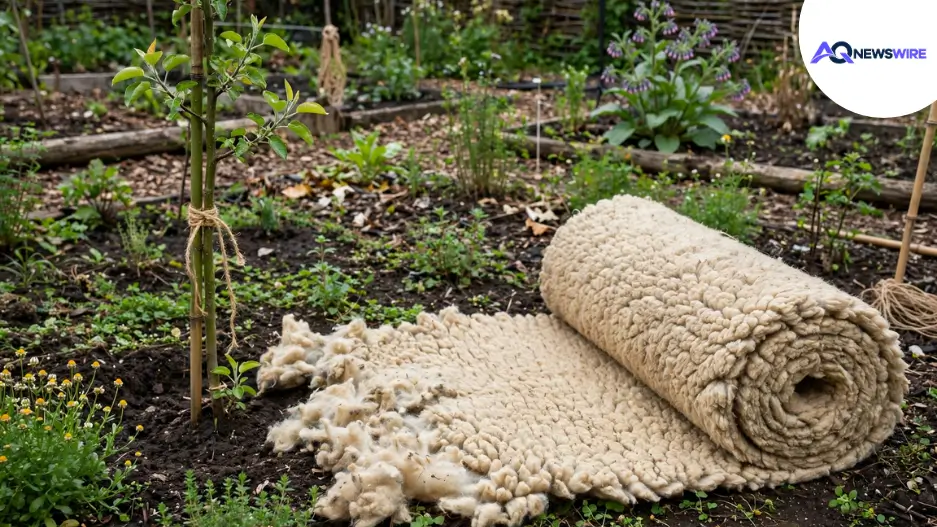
If you have spent an afternoon wrestling with black plastic weed barrier in the blazing heat, you already know the sinking feeling. It tears on small pebbles, catches the wind, and after two seasons turns into a brittle nightmare that leaves thousands of shredded plastic threads stuck in your soil forever.
The same story plays out in our attics and living rooms. We surround ourselves with itchy pink fiberglass that makes our skin burn, rigid styrofoam that traps mold, and synthetic foam mats that off-gas chemical odors the second they come out of the plastic wrapper.
That quiet frustration is why gardeners, renovators, and people who simply care about what they bring into their homes are turning toward Wollmatten (the German term for wool mats).
Instead of another petroleum-based product designed in a laboratory, these mats rely on something humans have used for millennia: the rugged, springy fleece sheared from pasture sheep. Here is what they actually are, how they are made, and where they make the biggest difference in daily life.
The Anatomy of a Wollmatte: How They Are Made
At its simplest, a Wollmatte is a dense, cohesive sheet of felt created purely from raw sheep’s wool. It is not knit into fine yarn for an expensive sweater; it takes a completely different path from pasture to final product.
The Problem With Coarse Wool
Every spring, sheep have to be shorn for their own welfare. While superfine Merino fleece gets snapped up by high-end clothing brands, the tough, coarse wool from heritage grazing breeds is often deemed "too scratchy" for garments. For years, farmers struggled to sell this wool, sometimes being forced to burn it or let it sit in barns. Turning that coarse fleece into high-density mats turns what was once an agricultural headache into a high-performance material.
The Needle-Punching Method
What makes these mats special is that they hold together without chemical glues or synthetic binders:
Gentle Washing: Fresh fleece gets washed in warm water with biodegradable soaps to strip away mud, sweat, and excess grease, leaving just enough natural lanolin behind to keep the fibers supple and naturally water-resistant.
Carding: Large rotating drums lined with wire teeth comb through the clean wool, untangling clumps until it looks like a wide, fluffy cloud.
Needle-Punching: The wool passes under massive industrial looms fitted with thousands of barbed needles. As those needles plunge up and down at high speed, the tiny barbs snag the fibers, tangling them into an incredibly tough, interlocking sheet.
Depending on how many times it passes under the needles, you end up with anything from a thick, springy insulation batt to a dense, tough felt roll you can walk on.
Why Sheep’s Wool Performs Better Than Plastic
You cannot out-engineer biology. Wool has evolved over thousands of years to keep an animal alive in freezing rain and baking heat:
It Breathes Naturally: Wool is hygroscopic. Its fibers have a moisture-repellent outer layer and an interior core that loves water. It can soak up roughly a third of its weight in water vapor without ever feeling soggy to the touch.
It Cleans the Air: The primary protein in wool is keratin, which contains reactive amino acids that physically bind to airborne pollutants—like formaldehyde off-gassing from furniture—and lock them away permanently.
It Resists Fire: Wool has a natural ignition threshold well over 550°C and a high nitrogen content. It will char if you hold a lighter to it, but the moment you remove the flame, it snuffs itself out.
Putting Wool Mats to Work in the Garden
If you want to see a wool mat earn its keep immediately, roll it out in a vegetable patch or around your young fruit trees.
Ditching Plastic Weed Fabric
When you stake down a needle-punched wool mat over your garden bed, it blocks out 100% of the sunlight weed seeds need to wake up. Unlike plastic sheeting that acts like a suffocating lid, wool lets rainwater drain straight through and lets the soil breathe. Earthworms can freely come to the surface, and beneficial soil fungi thrive underneath the dark, damp felt.
Insulating Roots from Frost and Heat
Think of a wool mat as an all-season jacket for your soil. In early spring, it shields tender root systems from sudden cold snaps. In the dog days of summer, it acts as a thermal barrier, keeping the root zone substantially cooler than bare ground and cutting your watering routine by half.
Built-in Fertilizer
Here is where wool completely embarrasses synthetic garden fabric: it feeds your plants as it disappears.
Over 12 to 24 months, earthworms and soil bacteria slowly break down the raw wool. Pure wool fleece contains roughly 10% to 12% nitrogen, alongside beneficial traces of sulfur, potassium, and carbon. As the mat slowly breaks down, it trickles organic plant food straight into the topsoil. Once it is gone, you don't have to pull it out—you simply rake over the remaining fibers and plant your next crop.
A Natural Deterrent for Slugs
Anyone who has lost an entire row of young lettuce overnight knows the pain of garden slugs. Because wool felt consists of millions of coarse, scratchy fibers that quickly absorb moisture, slugs and snails hate crawling over it. The rough texture irritates their soft underbellies, making them turn around and look for an easier meal elsewhere.
Home Insulation and Room Acoustics
Wool mats are making serious waves inside home renovations, off-grid camper vans, and recording spaces.
Breathable, Safe Insulation
Traditional fiberglass batts are miserable to work with. If you don't wear gloves, goggles, and a tight respirator, you will be coughing and scratching for days. Even worse, if condensation gets trapped inside a wall cavity, damp fiberglass sags, loses its R-value, and breeds hidden black mold.
Wool batts, on the other hand:
Can be cut and handled with bare hands without causing rashes or lung irritation.
Absorb moisture swings inside your walls during winter, holding moisture safely and releasing it outward when warmer weather arrives.
Keep their shape and loft for decades, never packing down or leaving cold drafts near the ceiling.
Muffling Echoes and Footsteps
Hard surfaces make modern houses noisy. Wool mats make incredible natural acoustic insulation because sound waves get trapped inside the tangled web of fibers instead of bouncing off the wall.
Hanging wool panels wrapped in linen behind your desk cuts out annoying echoes on conference calls, while laying thin, dense wool felt under hardwood or floating laminate floors deadens the sharp, hollow click of pet claws and footsteps.
Wellness, Pets, and Home Comfort
Beyond construction and gardening, wool mats bring tangible comfort directly into the house.
Yoga and Meditation
If you practice restorative yoga, Yin yoga, or meditation on cold winter mornings, a thick virgin-wool mat changes everything. Unlike thin rubber mats that stick to your skin and transfer cold from the subfloor, a heavy wool mat provides thick cushioning for sore knees, supports your wrists, and feels warm the instant you sit down.
The Ultimate Pet Bed
Drop an off-cut of a wool mat onto your living room floor, and your dog or cat will curl up on it within five minutes. Animals are instinctively drawn to the gentle scent and warmth of sheep's wool. Because of wool's natural breathability and trace lanolin content, it stays fresh, supports stiff joints in older animals, and resists the musty smells that plague cheap foam pet beds.
Buying and Caring for Your Wollmatte
Getting the best results comes down to matching the mat to your specific task:
For Garden Mulch: Look for raw, 100% untreated sheep's wool felt with a density around 400 to 800 g/m². Double-check that it does not contain a hidden plastic netting inside that won't decompose.
For Home Insulation: Stick strictly to certified building-grade batts. These are treated with safe, eco-friendly mineral salts (like borates) to ensure clothes moths won't nest inside your walls.
For Living Spaces: Choose wool mats that are scoured thoroughly so they have no heavy sheep scent, and verify they come from cruelty-free farms that do not practice mulesing.
How to Clean Them
Wool is naturally dirt-repellent thanks to its smooth microscopic scales. For indoor rugs, pet beds, or yoga mats, an occasional shake outside in the fresh air and a quick pass with a vacuum cleaner is usually all you need. If you spill something, blot it right away with cold water and a dash of mild wool soap. Never soak a wool mat in hot water or run it through a tumble dryer unless you want it to shrink down into a rigid trivet.
Real Value Over Quick Fixes
Wollmatten definitely cost more upfront than a pack of plastic garden weed fabric or a roll of cheap yellow fiberglass. There is no denying that.
The math changes, however, when you look at the whole picture. When a garden mat feeds your soil and vanishes naturally without leaving microplastics behind, or when your wall insulation quietly purifies your air for forty years without posing a fire hazard, that small premium pays for itself ten times over. Sometimes the smartest way forward really is stepping back to what nature has already solved.
Frequently Asked Questions
What is a Wollmatte made of?
It is a thick sheet or roll of felt made from sheep's wool that has been washed, combed out into a web, and mechanically locked together using thousands of barbed felting needles without any chemical glues.
Are wool garden mats really better than black weed fabric?
Yes. Black plastic landscape fabric starves the soil of oxygen, degrades into microplastics under the sun, and has to be ripped out eventually. Wool mats block weeds just as well, let air and water soak right through, and decompose into organic fertilizer.
Will a wool mulch mat attract rats or mice in my garden?
No. Rodents cannot digest wool fibers and do not eat it. While mice might pull apart loose, fluffy wool to line nests in an attic, the flat, dense texture of a garden mulch mat holds zero interest for them.
How long does a wool mat take to rot in the soil?
Depending on how damp your climate is and how active your soil microbes are, garden wool mats generally break down completely within 12 to 24 months, feeding the soil the entire time.
Does wool insulation make your home smell like sheep?
No. Building-grade wool batts are scoured clean and rinsed thoroughly before manufacture, leaving them virtually odorless. Garden-grade rolls have a mild, earthy farm scent when first soaked by rain, but that dissipates within a week or two outdoors.
Is wool safe for pets to sleep on?
It is one of the best materials available. It is completely non-toxic, cushions older joints, stays cool in summer and warm in winter, and naturally resists pet odors thanks to wool's moisture-wicking properties.
How does wool help quiet a room?
Wool fibers are springy, crimped, and tightly tangled. When sound waves hit a wool mat, they get caught in tiny air pockets inside the felt and lose their energy, drastically cutting down on echoes and footstep noise.
Can wool mats catch fire?
Wool is notoriously difficult to ignite. Because of its moisture content and high nitrogen levels, it requires high temperatures (around 560°C to 600°C) to burn. If exposed to a direct flame, it chars and puts itself out as soon as the flame is taken away.
How do you wash an indoor wool mat?
Shake it out outdoors or vacuum it gently with a brush attachment. For dirty spots, dab lightly with cold water and a small drop of wool-safe detergent. Never put wool mats in hot water or high-heat dryers.
Do wool mats help plants during hot dry spells?
Yes. Wool acts like a sponge, soaking up morning dew and rainfall, then shielding the soil beneath from hot sun and wind. This stops water from evaporating out of the ground and significantly cuts down on how often you need to drag out the garden hose.
You may also like to read: