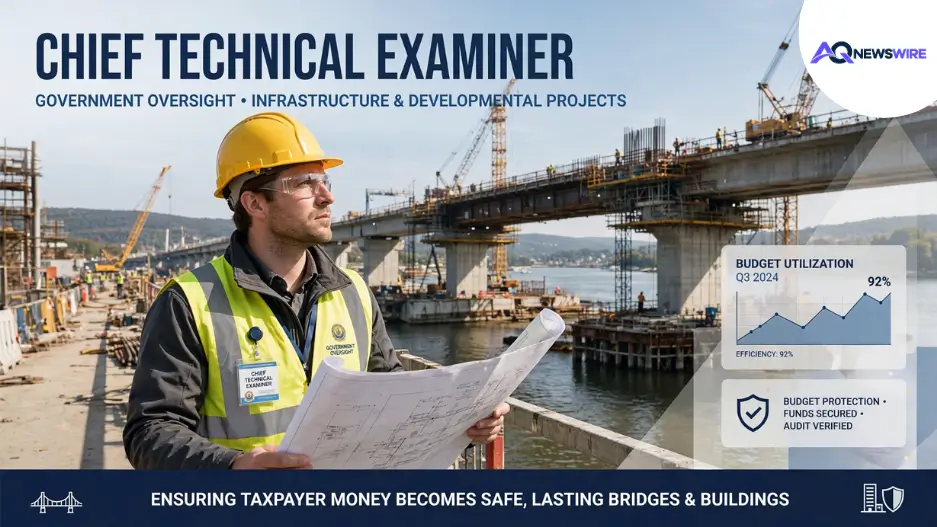
Billions of taxpayer dollars pour into infrastructure and developmental projects every single year. Yet, without serious oversight, these massive budgets are awfully prone to spiraling costs, shoddy construction, endless delays, and plain old financial leakage. It makes you wonder: how do governments actually ensure that public money turns into safe, lasting bridges and buildings rather than disappearing into a bureaucratic black hole?
The secret usually comes down to specialized technical governance. At the heart of that system is the Chief Technical Examiner (CTE). Working closely with independent anti-corruption and vigilance bodies—like India's Central Vigilance Commission (CVC)—the CTE acts as the critical bridge between hard-nosed engineering execution and strict financial watchdogs.
Let’s take a closer look at what a Chief Technical Examiner actually does, how their audits work, and why modern tech is completely changing the game.
What is a Chief Technical Examiner?
Put simply, a Chief Technical Examiner (CTE) is a veteran technical expert who leads an independent oversight body. Their entire job is to look at public works, procurement contracts, and government spending through a vigilance lens.
Why Independence Matters
Titles vary around the world, but the role is most famous as the technical wing of supreme vigilance organizations like the CVC. Crucially, the CTE operates completely outside the government departments that build the projects. This separation is non-negotiable—it’s what keeps their technical reviews unbiased, objective, and entirely free from internal political or departmental pressure.
CTEs vs. Regular Project Engineers
Don't mix up a CTE with a regular project manager or procurement officer:
Project Engineers design, build, and handle the day-to-day grit of construction.
Procurement Officers write bidding documents, deal with vendors, and manage the commercial award process.
The Chief Technical Examiner swoops in as an independent second line of defense. They run post-facto or concurrent technical reviews to verify that taxpayers actually got what they paid for.
The Lifecycle of a CTE Audit
A CTE's job isn't limited to traditional concrete and steel. Modern CTE teams evaluate everything from massive highway construction and electrical grids to high-value IT procurement and consulting services.
Their oversight generally covers five distinct phases of a project:
[Pre-Tender Scrutiny] ──> [Bidding Evaluation] ──> [Site Inspections] ──> [Post-Completion Audits] ──> [Systemic Reform
1. Pre-Tender Scrutiny
The work begins long before anyone breaks ground. The CTE evaluates initial cost estimates, checks market rates, and reviews technical sanctions. By catching inflated estimates early, they stop bloated budgets before they ever hit the open market.
2. Tender and Procurement Evaluation
During the bidding stage, the CTE looks over the fine print to ensure the playing field is fair. They actively hunt for rigged clauses or conditions that unfairly favor a single vendor over standard public procurement rules.
3. Execution and Site Inspections
While construction is underway, CTE teams conduct both scheduled and surprise site visits. They test materials against strict benchmarks (like BIS or IRC codes), inspect the actual workmanship, and verify that physical progress matches what the engineering logs claim.
4. Post-Completion Audits
Once the dust settles and a project wraps up, the CTE steps in to review final bills, completion certificates, and measurement books. This is where they catch discrepancies between what was billed and what was actually built before the final checks are signed.
How a Technical Audit Actually Works
To keep things consistent, CTE offices rely on structured reviews called Intensive Examinations. These are deep-dive audits triggered either randomly or by specific complaints on high-value public projects.
What Auditors Look For
During an intensive examination, the team checks:
Administrative Approvals: Did they actually secure proper land acquisition and environmental clearances?
Quality Control: Did the builders test materials as frequently as safety standards require?
Quantity Reconciliation: Do the deviation statements and change orders have proper administrative backing?
Observations and Explanations
If auditors spot a red flag, the CTE issues a formal "technical observation" to the executing agency.
The Response: The department has to cough up justifications, logs, or technical data.
The Resolution: If the explanation holds water, the observation gets dropped. If they find a systemic lapse or proof of overpayment, the process triggers financial recovery or administrative action.
CTE vs. CVO: Clearing Up the Confusion
People often use Chief Technical Examiner (CTE) and Chief Vigilance Officer (CVO) interchangeably, but they have very different day-to-day mandates:
Feature
Chief Technical Examiner (CTE)
Chief Vigilance Officer (CVO)
Main Focus
Specialized engineering, technical quality, and procurement audits.
Internal organizational integrity and administrative inquiries.
Scope
Cross-departmental technical assessments, site visits, and rate analyses.
Department-specific corruption probes and disciplinary proceedings.
Expertise
Advanced civil, electrical, mechanical, or IT engineering.
Administrative law, public service rules, and investigations.
Because a central CTE office can't possibly inspect every single minor project across a nation, department-level CVOs often run their own "CTE-type" Intensive Examinations following the exact same guidelines.
How Technology is Revolutionizing Technical Audits
Gone are the days when public auditors relied entirely on dusty paper files and manual measurements. Modern CTE offices use tech to keep agencies honest:
Digital Measurement Books (e-MBs): Old paper logs were notoriously easy to backfill and fake. Digital MBs create timestamped, tamper-proof records of every milestone.
Geo-Tagging and Drones: Inspectors now use geo-tagged photos and aerial drone mapping to cross-reference whether reported construction milestones actually exist in the real world.
Data-Driven Risk Scoring: Advanced software algorithms scan thousands of procurement bids to spot weird patterns—like rigged bidding rings or repeated cost inflations—so auditors know exactly where to look.
Wrapping It Up
At the end of the day, a Chief Technical Examiner isn’t just there to point fingers and find faults. By baking serious engineering expertise into the oversight process, the CTE makes sure public infrastructure is safe, durable, and cost-effective. Ultimately, a strong CTE framework protects public resources, builds trust between citizens and the government, and pushes public procurement toward a cleaner, more efficient future.
Frequently Asked Questions (FAQ)
What is the main job of a Chief Technical Examiner?
A CTE runs independent technical and contractual audits on public sector projects to make sure taxpayer money is spent wisely and delivers the promised quality.
Who gets to be a Chief Technical Examiner?
The role usually goes to veteran engineers or procurement experts with deep backgrounds in civil, electrical, mechanical, or IT project management.
Can a CTE arrest corrupt officials?
No. A CTE conducts technical audits and feeds information to vigilance bodies, but they aren't a criminal investigation or law enforcement agency.
What kinds of projects can a CTE inspect?
They can look at almost any public expenditure, from roads and bridges to IT systems, heavy machinery purchases, and specialized consulting contracts.
What is a "CTE-type" examination?
It's a technical audit carried out by a department's own Chief Vigilance Officer (CVO) using the standardized inspection rules set up by the CTE organization.
What happens after the CTE spots an issue?
The department in charge gets a chance to explain or fix it. If their technical defense makes sense, the case is closed; otherwise, recovery steps or disciplinary actions follow.
How does pre-tender scrutiny stop corruption?
It reviews cost estimates and technical specs before bidding even opens, which keeps bloated budgets and rigged "tailored" clauses out of the running.
Are audits only done after a project is completely finished?
Not at all. Technical checks happen all through the project lifecycle—from planning and active construction to final bill audits.
Why is the CTE structurally independent?
Independence ensures that auditors can look at a project objectively without worrying about pressure from the government agencies executing the work.
How is modern tech changing things?
Auditors now rely on digital measurement books, geo-tagged site photos, and data analytics to catch anomalies early and run tamper-proof checks.