

Donald Trump made it clear to a Texas crowd this week that he isn't in any rush to shake hands on a Middle East truce.
Standing behind the podium at a campaign rally in San Antonio, the former president gave an update on backchannel diplomacy with Tehran—and promptly threw cold water on the terms currently being tossed around. While he offered kind words for his special envoy Steve Witkoff, calling him a talented negotiator working around the clock, Trump signaled he has little interest in the off-ramp Tehran is offering.
"He’s working on the Iran deal and doing very well. I think the deal isn't really something that I want to do, but they’re willing to offer us anything to stop," Trump told the audience. He doubled down on his baseline red line—promising Tehran will "never have a nuclear weapon"—and predicted the standoff would wrap up fast: "That war ends—it’s going to be very soon. It’s got to be very soon."
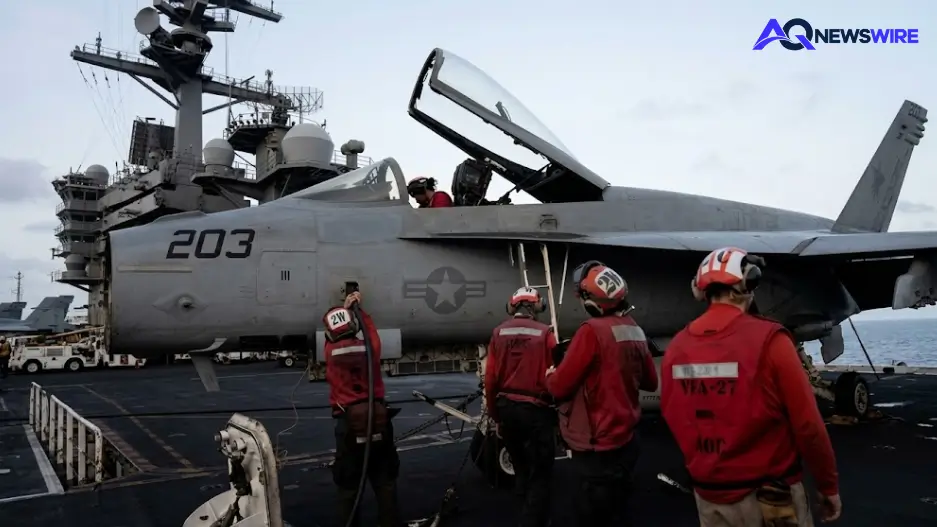
Across the Potomac, the Pentagon isn't waiting around to see if diplomacy pans out. The White House has formally asked military planners to map out actionable operational options for a renewed wave of strikes on Iranian targets—plans that could easily be put into motion before voters head to the polls for the November midterm elections.
The Paper Truce That Never Really Held
To understand why the region is back on edge, you have to look at how fragile the peace has been all year.
Ever since heavy combat erupted on February 28 between Iran, Israel, and the United States, maritime traffic through the Strait of Hormuz—the vital shipping corridor that carries a fifth of the world's petroleum—has turned into a geopolitical hostage. Tehran leaned into asymmetrical warfare, launching ballistic missiles and loitering drones that crippled transit and sent commercial insurance premiums through the roof.
A framework brokered through Qatari and Pakistani backchannels in June brought a brief pause to the worst of the shooting. But turning that ceasefire into a binding treaty has hit a wall. Washington continues to insist on total verification, intrusive nuclear site inspections, and permanent guarantees for free navigation through the Strait. Tehran, meanwhile, wants immediate sanctions relief without permanently giving up its domestic enrichment facilities.
With commercial vessels still taking fire in the Gulf—including an injured tanker crew earlier this week—patience inside Washington has worn thin.
What’s on the Pentagon's Target List
Inside U.S. Central Command (CENTCOM), planners aren't working on symbolic warning shots. If an execute order is given, military forces are positioned to strike at the foundations of Iran's strategic posture:
Underground Enrichment Sites: Deeply buried cascades and centrifuge workshops at Natanz and Fordow that weathered earlier barrages.
Coastal Missile Batteries: The mobile launchers, radar installations, and fast-boat docks the Revolutionary Guard uses to harass Gulf shipping lanes.
Energy Export Hubs: Oil storage complexes, terminals, and command posts that bankroll the regime’s daily operations.
Military commanders stress that no launch timeline has been signed off on. But having ready-to-fly strike packages on the president's desk ensures the White House can pivot from diplomacy to kinetic force in a matter of hours.
The Domestic Political Tightrope
Rattling the saber weeks before a critical election is a high-wire act with zero room for error.
Trump wants to project strength, look uncompromising on the world stage, and keep his base energized with talk of decisive power. But military strikes come with instant economic blowback.
Iran may be battered, but it can still choke off Gulf tanker traffic or strike regional refineries. If fresh bombing runs send oil surging back above $100 a barrel, American drivers will feel the pain at the gas pump almost immediately. Spiraling fuel costs in the final stretch of an election season are the worst-case scenario for any incumbent party defending its majorities.
For now, Washington is using the threat of bunker-busters as maximum leverage. Trump wants Tehran convinced that walking away from the negotiating table won't bring a stalemate—it will clear the skies for American bombers.



