

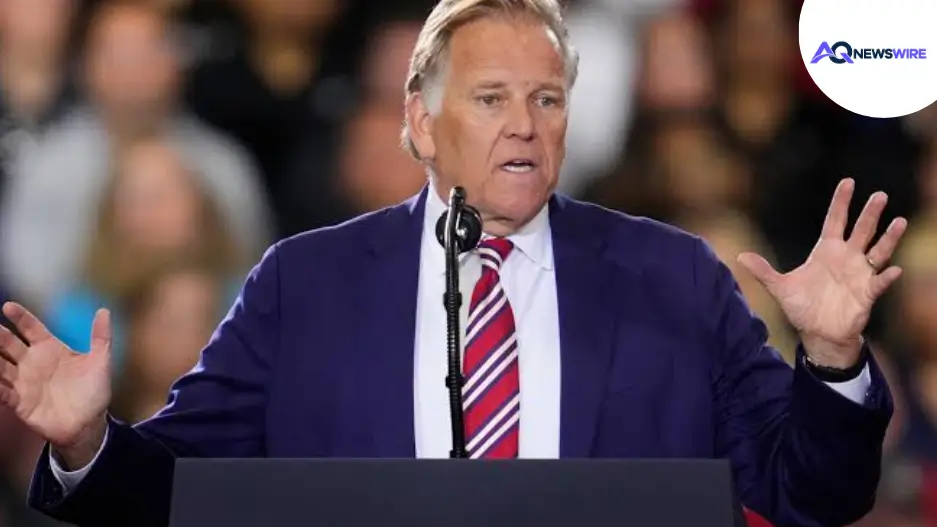
High Stakes in a Battleground Toss-Up
With control of the United States Senate hanging in the balance, Michigan’s open-seat contest between Republican nominee Mike Rogers and Democratic nominee Abdul El-Sayed has become a critical testing ground for the national political mood. As the candidates compete to replace retiring Democratic Senator Gary Peters, two major federal policies—escalating trade tariffs on Canadian imports and the ongoing military conflict with Iran—have emerged as significant political headwinds for the Republican ticket.
Rated as a pure toss-up by nonpartisan election forecasters, the race has tightened considerably, though polling averages show El-Sayed holding a narrow four-point advantage. That margin has prompted a noticeable pivot from Rogers, who is increasingly seeking to insulate his campaign from the economic fallout of White House decisions.
The Economic Toll of the Canadian Tariff Standoff
Few states are as economically intertwined with Canada as Michigan, making the administration's decision in August to impose 50% tariffs on roughly $20 billion worth of Canadian goods a central issue on the campaign trail. Following the collapse of bilateral trade negotiations and subsequent retaliatory duties from Ottawa, Michigan’s industrial and agricultural sectors have absorbed a sharp blow. State agricultural exports to Canada dropped by 12.3% in 2025, and polling conducted by WDIV and The Detroit News indicates that 64.2% of likely Michigan voters oppose the Canadian tariffs.
Recognizing the voter backlash, Rogers—who previously defended the administration's trade posture—launched a statewide television advertisement in early October breaking with the White House. Declaring that "Canada is not our enemy," Rogers called for an immediate end to the tariff standoff. During the candidates' first televised debate in Grand Rapids, Rogers noted that he had personally lobbied Commerce Secretary Howard Lutnick to broker a deal with Ottawa, acknowledging that several current duties are "too high and not helpful" for Michigan workers.
El-Sayed, meanwhile, has kept the trade dispute at the forefront of his economic messaging, citing estimates that the tariff standoff costs the average Michigan household up to $5,600 annually in higher consumer prices.
Iran Conflict Fuels Voter Anxiety at the Gas Pump
Alongside trade friction, the financial and geopolitical toll of the war with Iran is dominating voter concerns. Global energy market disruptions tied to the Middle East conflict have placed Michigan among the top five states experiencing the fastest-rising fuel costs. Economic analysts estimate that the conflict has cost the average Michigan household more than $500 in additional gasoline expenses, leading to long lines at discount retailers and squeezing family budgets.
On the debate stage, El-Sayed pointed to the gas pump as proof that the military campaign is hurting working families, labeling the intervention a reckless conflict and advocating for a return to diplomatic frameworks. While Rogers has defended the military effectiveness of U.S. strikes in degrading Tehran’s nuclear and naval capabilities, he too has shifted his tone toward de-escalation, telling voters that the conflict needs to come to a swift conclusion to provide economic relief at home.
A Broader Shift in Campaign Messaging
Rogers’ recalibration reflects a wider strategic trend among battleground Republicans ahead of the November midterms. According to advertising data tracked by AdImpact, only 4.3% of general election television spots aired by Republican candidates mention President Trump—a steep decline from the 47.1% recorded during the GOP primaries. Conversely, Democratic campaigns have featured the president in nearly 21% of their general election ads, seeking to tie GOP contenders directly to unpopular trade duties and rising energy prices.
During the Grand Rapids debate, El-Sayed seized on Rogers’ evolving stances, accusing the former congressman of acting as a staunch administration loyalist until slipping poll numbers forced a change in rhetoric. With less than a month remaining before Election Day, the outcome in Michigan may ultimately hinge on whether voters view Rogers as an independent check on Washington or hold the Republican party accountable for the rising cost of living.



