

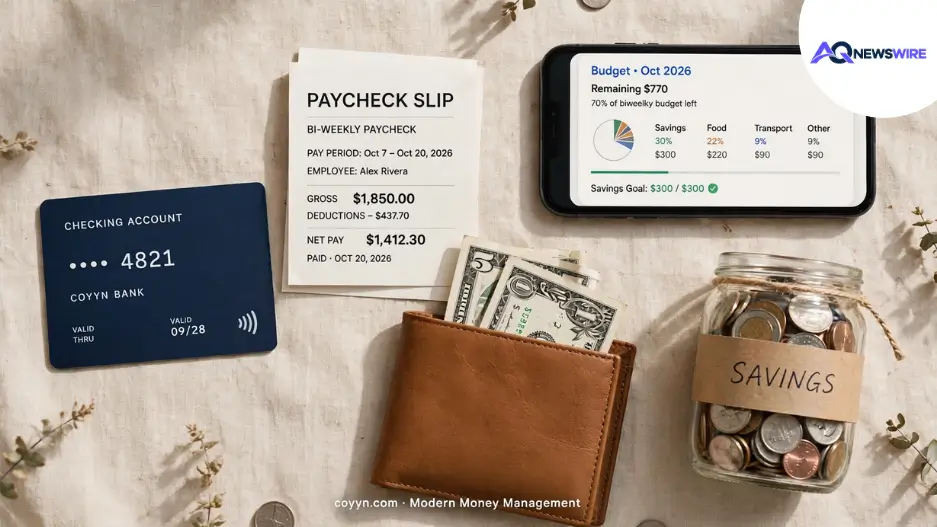
Handling money used to be fairly predictable. You opened a checking account down the street, waited for a bi-weekly paycheck, and tried to set aside whatever was left over at the end of the month.
Today, that playbook feels like it belongs to another era. Millions of people earn income through unpredictable freelance gigs, take payments through digital wallets, or manage cash across borders without ever setting foot in a bank branch. At the same time, the rise of crypto and automated financial apps has added another layer of complexity. If you try to research how any of this works, you usually get stuck between two extremes: dense, jargon-stuffed institutional reports on one side, or reckless social media influencers hyping volatile speculative tokens on the other.
That disconnect is where websites like Coyyn come into play.
Because the name sounds financial, people who stumble across the site often wonder: Is this a real bank? Can I trade cryptocurrency here? Or is it just an informational blog?
Here is an honest, straightforward look at what Coyyn is, what it publishes, its safety record, and how to use it without getting misled.
What Is Coyyn? The Core Mission
Coyyn (hosted at Coyyn.com) is an open-access digital publication and educational website. It is not a financial institution, a broker, or a crypto exchange.
The site focuses on breaking down the intersection of digital money, online work, and everyday investing into plain English. Instead of publishing formal academic research papers, it produces practical guides and overviews designed for ordinary readers trying to make sense of the modern economy.
Who Reads It?
The site tends to attract a few distinct groups:
Freelancers and gig workers trying to balance erratic payments, client invoices, and self-employment taxes.
Crypto beginners looking for honest explanations of basic concepts like blockchain networks, private keys, and cold storage wallets.
Early-stage entrepreneurs searching for lean, low-cost ways to organize tools and run an online business.
Everyday savers curious about how modern digital banking apps differ from brick-and-mortar credit unions.
The Four Main Topics Coyyn Covers
The platform organizes its library into several distinct editorial tracks:
1. Digital Assets and Cryptocurrency
Crypto is notorious for confusing terminology and high-pressure marketing. Coyyn’s guides on digital assets generally focus on the basics and safety first:
Blockchain Foundations: Explaining what layer-1 networks like Bitcoin or Ethereum actually do, along with how newer scaling tools try to make transfers faster and cheaper.
Wallet Hygiene and Custody: Breaking down the critical difference between leaving coins on a third-party exchange and holding your own private keys with a hardware wallet.
Spotting Scams: Practical warnings about unsolicited investment messages on Telegram or Discord, suspicious staking pools, and malicious phishing links.
2. Modern Banking and FinTech
Traditional banks move slowly, but modern banking apps come with their own set of caveats. This section explores how digital banking platforms work behind the scenes:
Neobanks vs. Traditional Banks: Exploring how tech companies partner with chartered, FDIC-insured banks to offer mobile-first accounts.
Payment Rails: Clear explanations of what happens when you send an ACH transfer, initiate an international wire, or receive money via real-time payment apps.
Avoiding Sneaky Fees: Tips for dodging out-of-network ATM surcharges, monthly account maintenance fees, and bad currency exchange rates.
3. The Gig Economy and Freelance Finances
Working for yourself provides freedom, but it eliminates the administrative safety net of an employer. This is one of the more practical areas on the site:
Smoothing Out Irregular Income: Strategies for setting up separate business checking accounts and building cash buffers for quiet months.
Invoicing and Contracts: How to write simple client agreements that include clear payment terms, milestones, and late fees.
Quarterly Tax Basics: Reminders to calculate and save for self-employment taxes long before the year-end deadline hits.
4. Small Business, Capital, and Investing
Building long-term financial security requires more than just earning money; it requires knowing how to allocate it:
Lean Operations: How small online teams can use off-the-shelf software to handle accounting, CRM, and customer support without taking on expensive debt.
Sensible Investing Fundamentals: Evergreen principles like dollar-cost averaging, low-cost index funds, and broad portfolio diversification.
Alternative Physical Assets: Articles exploring physical tangible collectibles, such as numismatics (rare coins), and how to verify authenticity before buying.
Important Distinction: An Educational Blog, Not a Financial App
The name "Coyyn" sounds like a financial product, and some of the site's category headers—like "Banking" or "Capital"—use visual tiles that can look like product offerings at first glance.
Because of that layout, some visitors mistakenly assume they can open a bank account, apply for a line of credit, or trade crypto directly on Coyyn.com.
To be completely clear: Coyyn is strictly a reading site.
It does not hold money or accept deposits.
It does not process peer-to-peer transfers or wire funds.
It does not offer cryptocurrency wallets or exchange services.
It does not issue business loans or personal credit.
If you come across anyone claiming to be a representative of "Coyyn" asking you to deposit money, invest in a fund, or send crypto, walk away immediately. That is a scam. Coyyn does not provide custodial financial services.
Safety, Security, and Editorial Credibility
Before you take advice from any financial website, you should check its track record and security practices.
Standard Technical Security: The website uses active HTTPS encryption with modern SSL certificates and Cloudflare infrastructure. Browsing the articles poses no security risk to your device, and reading content does not require entering personal passwords or credit card details.
Clear Disclaimers: The site includes explicit disclaimers stating that its articles are published for informational purposes only. It does not claim to offer registered investment, legal, or certified accounting advice.
Anonymous Ownership: Like many independent content portals, Coyyn does not publish detailed corporate bios or exhaustive disclosures about its parent company. While the articles provide helpful introductory overviews, it should be treated as a casual jumping-off point rather than an institutional financial authority.
Whenever you read about a specific financial product, tax strategy, or software tool on any blog—including Coyyn—always check the original documentation or consult a certified professional before making money moves.
Pros, Limitations, and the Verdict
The Good
Broad, Interconnected Topics: It treats freelancing, digital banking, and modern investments as connected parts of the same digital economy.
No Paywall: You can read the guides freely without paying subscription fees or signing up for memberships.
Everyday Language: Technical blockchain and finance topics are explained without drowning the reader in corporate jargon.
Focus on Gig Work: It pays real attention to the financial headaches unique to independent and remote workers.
The Drawbacks
Zero Direct Services: You cannot use the platform to actually move money, save cash, or buy assets.
Generic Advice: Because the articles are written for a wide audience, they cannot account for specific local tax laws or individual financial situations.
Requires Due Diligence: Like any blog that references external financial tools, you need to research third-party companies independently before signing up with them.
The Bottom Line
Coyyn.com is a handy, accessible reading hub for beginners trying to get their bearings in the digital economy. As long as you treat it as an informational primer—rather than a licensed financial advisor or a transactional app—it provides clear, practical context on where modern money is heading.
Frequently Asked Questions
What exactly is Coyyn.com?
It is an independent informational blog that publishes articles and explainers on digital finance, cryptocurrency, modern banking, and the gig economy.
Can I use Coyyn to buy, sell, or store crypto?
No. Coyyn is not a crypto exchange and does not provide digital wallets or custody services.
Is Coyyn a licensed bank?
No. The site does not hold a banking charter, does not accept customer deposits, and cannot issue loans or credit cards.
Do I have to pay or create an account to read articles?
No. The articles on Coyyn.com are free to read, and you do not need to register an account or share billing information.
Who is the website designed for?
It is written for freelancers, gig economy workers, small business owners, and beginners curious about how digital money and modern banking work.
Can I hire freelance clients or find jobs on Coyyn?
No. While the site publishes guides on freelancing and managing client work, it does not operate as a job board or gig marketplace.
Does Coyyn provide personal financial or tax advice?
No. All content is strictly educational. For specific investment decisions or tax filings, you should always consult a licensed financial planner or certified accountant.
Why do some website sections say "Banking" or "Capital"?
Those are thematic editorial categories for organizing guides on banking apps, payment technology, and business funding methods. They do not link to native banking or lending services.
Is it safe to visit the website?
Yes. The site uses standard HTTPS encryption to ensure secure web browsing.
How should I verify information found on Coyyn?
Always check the publication date of the guide, cross-reference rules with official regulatory bodies (like tax authorities), and review primary documentation for any apps or tools mentioned.