
Finding practical advice about work life nowadays can feel like a chore. If you search for basic productivity tips or career advice, you usually hit one of two walls: dry academic studies on organizational behavior, or expensive software landing pages trying to sell your company another monthly team subscription.
That common frustration is why sites like Onlyworkmoods.com pop up on people's radars.
Still, the domain name tends to confuse first-time visitors right away: Is this an app where employees log their daily happiness? An internal survey tool for HR? Or just an ordinary lifestyle blog?
The short answer: Onlyworkmoods.com is simply an informational blog, not a piece of software. You won't find mood trackers, employee surveys, or subscription dashboards here. Instead, it is an open-access reading site covering careers, daily productivity, simple business habits, and work-life balance.
Here is an honest breakdown of what the site publishes, the common misconception around its name, its security setup, and whether it is worth keeping on your reading list.
What Is Onlyworkmoods.com? Purpose and Philosophy
At its core, Onlyworkmoods.com is an independent digital magazine aimed at anyone trying to navigate the daily grind of modern work.
Why the Name "Work Moods"?
The name is where almost all the confusion starts. People naturally assume the site offers an interactive platform where teams track their morale or log workplace stress.
In reality, the site uses the word "moods" as an editorial theme. It refers to the shifting headspaces and energy levels everyone cycles through during a normal work week—from the focused sprint of hitting a tight deadline, to the mid-week slump, to the slow process of untangling burnout and building healthier boundaries.
Who Reads It?
The site writes for general readers who prefer plain-language takeaways over corporate jargon:
Remote and hybrid workers looking for practical ways to separate their workday from their home life.
Recent grads and job hunters needing straightforward resume tips, interview prep, and advice on workplace culture.
Freelancers and solo workers trying to balance erratic client communication, billing, and daily focus.
Everyday desk workers who just want a five-minute read on time management while having their morning coffee.
What Does the Site Actually Cover?
The articles on Onlyworkmoods.com generally fall into five core areas:
1. Career Growth & Daily Office Life
Navigating workplace dynamics or figuring out your next move can be tricky. This desk focuses on the fundamentals of building a career:
Job Searches and Interviews: Practical advice on tailoring resumes, answering tricky behavioral questions, and writing cover letters people might actually read.
Workplace Communication: Tips on handling tough conversations with a boss, setting realistic expectations with coworkers, and handling disagreements without drama.
Career Decisions: Frameworks for figuring out when to ask for a raise, how to back up your request with real numbers, and how to know when you've simply outgrown a job.
2. Productivity & Daily Habits
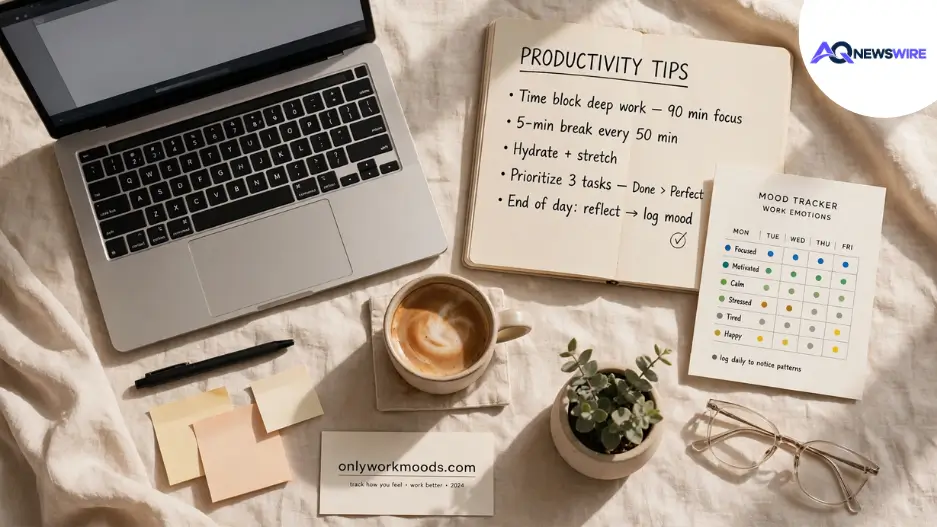
Productivity advice online usually pushes people toward extreme 5:00 AM routines or delivers vague, useless motivation. The site focuses on low-friction, realistic adjustments:
Time Management Methods: Straightforward guides on classic frameworks like the Pomodoro Technique, time-blocking, and using simple priority matrices.
Spotting Burnout Early: Clear reminders of what chronic exhaustion looks like before it knocks you out, along with advice on taking real time off.
Sensible Workday Routines: How to start your morning without immediately drowning in unread emails, and how to shut down your laptop at the end of the day so work stops following you around.
3. Business & Money Basics
Managing self-employment or keeping cash flow under control involves a sharp learning curve:
Freelancer Realities: Practical guides on client onboarding, writing clear agreements with defined payment terms, and dealing with late invoices.
Bootstrapping Small Projects: Realistic approaches to testing out an idea using inexpensive or free digital tools before spending serious money.
Personal Budgeting Habits: Simple frameworks for saving an emergency cash cushion to survive slow freelance months and keeping everyday business expenses organized.
4. Tech, Apps & Digital Life
Most knowledge work happens behind a screen, so understanding the tools you rely on matters:
Everyday Workflow Software: Beginner-friendly overviews of standard apps like Notion, Trello, Asana, and Slack—focusing on how to keep them simple rather than letting them take over your day.
Practical AI for Routine Tasks: Grounded looks at using writing and summary tools to draft routine emails, clean up meeting notes, and handle repetitive administrative chores.
Digital Wellness: Tips for trimming down notification clutter, setting phone quiet hours, and stopping work apps from buzzing after dinner.
5. Work-Life Balance & Wellness
Because how you feel directly influences how you perform, this section focuses on staying healthy off the clock:
Desk Ergonomics: Easy physical adjustments for screen height, chair posture, keyboard angles, and giving your eyes a break.
Moving More During the Day: Simple ideas for breaking up hours of sitting with short walks and basic mobility stretches.
Life Outside the Job: Gentle reminders to protect hobbies, time with friends, and your identity away from your job title.
An Informational Blog, Not an HR Software Tool
Because the phrase "work moods" sounds like something an enterprise HR department would buy, it helps to be clear about what you will and won't find on the site:
No tracking features: There are no mood logs, daily check-ins, or sentiment analytics.
No employee accounts: You don't need a corporate email, password, or profile to read anything.
No company dashboards: Managers cannot use it to run internal surveys or track team satisfaction.
Completely open reading: Every article is free to read on the web with no paywalls or gated forms.
If you came looking for employee engagement software like Culture Amp or Officevibe, Onlyworkmoods.com is not that. But if you want a quick, casual read on how to organize your day or communicate better at work, it works well as an informational resource.
What Is It Like to Read?
A good content site needs to be comfortable to browse. Here is how the reading experience stacks up:
Mobile-Friendly: Most people browse articles on their phones, and the pages scale cleanly to smaller screens without awkward layout breaks.
Easy to Scan: Subheadings, short paragraphs, and clear bullet points make it easy to find what you need without wading through paragraphs of fluff.
No Account Walls: You don't have to surrender your email address or navigate a popup wall just to finish reading an article.
Clean Reading Flow: The site avoids the aggressive video ads and full-screen popups that make reading modern news sites so frustrating.
Credibility, Privacy & Safety
Before you take advice from any online lifestyle blog, it pays to know what to expect:
Technical Security: The site runs on secure HTTPS with valid SSL certificates. Reading posts won't put your browser or device at risk, and you never have to enter sensitive passwords or credit card numbers.
Generalist Content: The articles are written for a broad audience. They offer practical introductory guides rather than dense academic research or formal legal advice.
Editorial Boundaries: Any post discussing mental wellness, workplace disputes, or financial habits is meant purely for education. They are never a substitute for direct advice from an HR specialist, labor lawyer, or healthcare professional.
Use the site for what it is: a helpful starting point for ideas and everyday productivity routines, but always double-check high-stakes career, legal, or health questions with accredited professionals.
The Verdict
Onlyworkmoods.com doesn't try to be a fancy corporate tool or a complex academic journal. Instead, it serves as a lightweight, accessible hub where anyone can pick up a quick productivity tip, rethink their workday habits, or find fresh perspective on their career.
As long as you understand it is a collection of articles—not a software app—it is a handy, zero-friction resource to browse whenever you need a quick reset during your workday.
Frequently Asked Questions
Is Onlyworkmoods.com an app or mood-tracking software?
No. Despite what the name suggests, Onlyworkmoods.com is simply an informational website that publishes articles. It has no software, surveys, or tracking features.
Is Onlyworkmoods.com free to read?
Yes. The entire site is free to browse, and there are no paywalls or paid subscription tiers.
Do I need to make an account or log in?
No. You do not need to register, provide an email address, or create a profile to read any of the guides.
What kinds of topics does the site focus on?
It publishes articles on career development, time management, daily productivity habits, small business basics, technology, and everyday wellness.
Can a company use the site to run employee surveys?
No. There are no tools, administrative portals, or survey mechanisms for monitoring or surveying staff.
Is it safe to browse the website?
Yes. The website uses standard HTTPS encryption to ensure secure web browsing and does not require software downloads.
Does the platform provide formal HR or legal counsel?
No. All content is intended strictly for general educational purposes. Serious workplace conflicts or legal questions should always be handled by an employment attorney or certified HR professional.
Does the site work well on smartphones?
Yes. The layout is mobile-optimized and formats cleanly across phones, tablets, and desktop computers.
Who writes and runs Onlyworkmoods.com?
The site operates as an independent lifestyle and workplace publication run by a digital editorial team, focusing on general-interest career topics.
How should I use the information on the site?
Use it as a practical starting point for everyday productivity habits, organization tips, and career ideas, while verifying complex legal, medical, or financial matters with qualified specialists.