
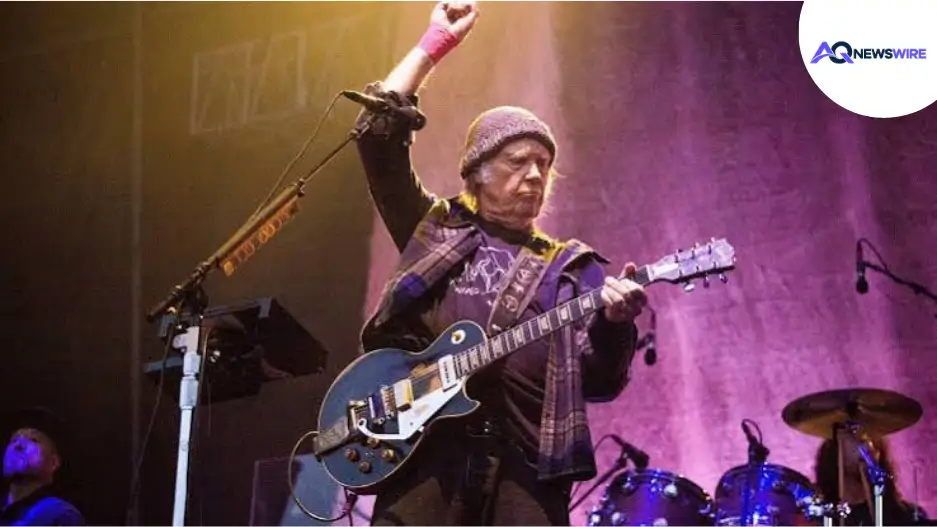
Rock and Roll Hall of Fame inductee Neil Young has reignited his long-running legal battle against Donald Trump’s political apparatus, filing a federal copyright infringement lawsuit seeking $10 million in statutory and reputational damages. The complaint, filed in the U.S. District Court for the Eastern District of Virginia, targets the Trump 47 Committee Inc.—a primary joint fundraising vehicle supporting the former president—alleging that the campaign organization willfully pirated Young’s classic 1989 anthem, "Rockin' in the Free World," during a high-profile political rally.
The filing marks an aggressive escalation in an ongoing clash between recording artists and political campaigns over musical licensing, public performance exemptions, and implicit political endorsements.
Coming six years after a previous copyright lawsuit brought by Young against Trump was resolved under confidential settlement terms, the new action alleges that campaign operators intentionally breached prior commitments by blasting the track to thousands of arena attendees without obtaining direct permission or valid public performance synchronization rights.
Inside the Complaint: What Happened at the Ohio Rally
The immediate catalyst for the complaint occurred on October 12, when Trump walked out to address a crowd at the Covelli Centre in Youngstown, Ohio. As the political candidate stepped toward the podium to deliver remarks, the guitar riffs and opening chorus of "Rockin' in the Free World" played over the arena’s public address system.
According to court filings submitted by Young’s legal counsel, the musical selection was not an accidental technical oversight, but an intentional, unauthorized public broadcast.
Attorneys argued that the Trump fundraising arm operated in full knowledge that:
The song’s copyright is strictly owned and defended by Young.
Young had explicitly excluded his catalog from standard political blanket licenses.
The campaign had specifically agreed not to deploy his intellectual property at live political functions following their previous legal settlement in 2020.
The lawsuit asserts that the unauthorized deployment damaged the 80-year-old musician's commercial brand and artistic integrity by implying to millions of broadcast viewers that he endorses the candidate’s platform.
Young emphasized the ideological friction in accompanying statements, reiterating that the composition was written as a critique of conservative economic neglect and social inequality during the late 1980s, making it the direct philosophical opposite of Trump's platform.
A Decade of Resistance: Tracing the Young-Trump Conflict
The legal showdown in Virginia represents the latest chapter in an ideological feud dating back to the launch of Trump's first presidential campaign.
2015: The Escalator Launch
The friction began in June 2015, when Trump descended the golden escalator at Trump Tower in New York City to announce his initial presidential bid. As he waved to reporters, "Rockin' in the Free World" served as the walkout audio. Young immediately issued a blistering public statement disavowing the usage and clarifying that no license had been granted, noting his political alignment at the time with progressive candidates like Bernie Sanders.
2020: The First Federal Lawsuit
Despite repeated cease-and-desist warnings, campaign organizers continued playing the song at multi-thousand-seat events, including an Independence Day address at Mount Rushmore in July 2020.
In August 2020, Young filed a formal copyright infringement complaint in the Southern District of New York, seeking statutory damages of up to $150,000 per violation. In December of that year, Young’s team abruptly filed a dismissal with prejudice, signaling that the parties had reached a private settlement. Industry sources and legal analysts noted that a key pillar of that resolution was an explicit commitment that the Trump campaign would cease playing Young’s compositions at future rallies.
2026: The Virginia Re-Filing
The decision to pursue a $10 million damage claim indicates that Young’s team is treating the recent Ohio incident not merely as a first-instance statutory infringement, but as a deliberate and willful breach of established legal understandings, substantially raising the potential financial liability for the campaign committee.
The Legal Arena: Blanket Licenses vs. Right of Publicity
The dispute highlights the recurring battleground of intellectual property law inside American campaign politics.
Political campaigns typically attempt to shield themselves from copyright claims by purchasing general political campaign licenses through Performing Rights Organizations (PROs) such as the American Society of Composers, Authors and Publishers (ASCAP) and Broadcast Music, Inc. (BMI). Venues also frequently hold generic commercial public performance licenses that permit background music during sporting events and civic gatherings.
However, modern copyright and trademark jurisprudence provides several mechanisms that allow artists to limit or revoke their catalogs from these arrangements:
PRO Exclusions: Major PRO agreements explicitly allow rights holders to withdraw specific musical compositions from political campaign licenses if an artist objects in writing. Once withdrawn, the standard venue license no longer shields the political group.
False Endorsement (Lanham Act): Under Section 43(a) of the Lanham Act, musicians can argue that associating an artist’s voice or composition with a political brand deceives the public into believing the artist sponsors, approves, or endorses the candidate.
Common-Law Right of Publicity: Multiple state jurisdictions protect public figures and creators from having their identity, distinctive artistic style, or persona commercialized or exploited without consent.
Because Young’s legal representatives had previously demanded exclusions through PRO networks and established formal legal restrictions with Trump’s organizations, the defense that the campaign was operating under standard venue rights faces severe legal scrutiny in court.
Part of a Broader Artist Revolt on the Campaign Trail
Neil Young is far from the only recording artist challenging the unauthorized usage of music at political events. Over multiple election cycles, a diverse spectrum of recording artists and legacy estates have demanded that political campaign teams cease deploying their catalog:
The Rolling Stones: Threatened litigation through BMI after the British rock band's tracks, including "You Can't Always Get What You Want," were played at arena rallies.
The Estate of Tom Petty: Issued a formal cease-and-desist letter after "I Won't Back Down" was played at a campaign event in Tulsa, Oklahoma.
Céline Dion: Condemned the use of her iconic ballad "My Heart Will Go On" during an event in Montana, criticizing campaign operatives for appropriating the cinematic theme without authorization.
ABBA and Queen: Publicly repudiated the playback of tracks like "The Winner Takes It All" and "We Are the Champions," urging event planners to respect artistic boundaries.
Contemporary Pop Stars: Figures including Sabrina Carpenter, Katy Perry, and Taylor Swift have previously filed formal takedown requests or issued public censures over campaign-related online video edits and arena playlists.
Young’s latest lawsuit carries heightened legal weight because it shifts from informal public complaints and cease-and-desist letters to active, high-dollar litigation in federal court.
The Song Itself: The Irony of "Rockin' in the Free World"
Beyond legal statutes, the conflict carries historical and lyrical irony.
Released on Young’s critically acclaimed 1989 album Freedom, "Rockin' in the Free World" is often misinterpreted in stadium settings as a celebratory, flag-waving anthem due to its driving, high-energy chorus.
In reality, the verses present a biting critique of social conditions during the George H.W. Bush administration, depicting widespread inner-city homelessness, systemic poverty, mothers struggling with substance dependency, and military posturing abroad. Lines detailing "people sleeping in their shoes" and a warning about a "thousand points of light" directly referenced political speeches of the era to highlight the human cost of government neglect.
Young has voiced frustration that a composition engineered as a protest anthem against political complacency is co-opted to rally crowds behind policies he has spent decades criticizing.
What Happens Next: The Road to the Eastern District of Virginia
The lawsuit now sits before U.S. District Judge Robert Payne in the Eastern District of Virginia.
The court will review several key procedural questions:
Did the Trump 47 Committee hold an active, applicable public performance license that covered the Youngstown, Ohio rally on October 12?
Did the prior 2020 settlement create enforceable contractual covenants prohibiting any future usage of Young’s works?
Can Young establish demonstrable commercial damages or brand dilution to support the $10 million figure?
If the case proceeds to discovery rather than reaching an early settlement, the Trump campaign committee could face depositions regarding internal music selection protocols, licensing verification steps, and communication logs surrounding event production.
For the broader music and entertainment industry, the lawsuit serves as a warning to political organizations across the ideological spectrum: treating legacy musical catalogs as free-for-all rally playlists carries escalating legal and financial consequences.
Frequently Asked Questions
Why is Neil Young suing the Trump fundraising committee?
Neil Young filed a federal copyright infringement lawsuit alleging that the Trump 47 Committee unauthorizedly used his 1989 anthem "Rockin' in the Free World" during an October 12 political campaign rally in Youngstown, Ohio.
How much is Neil Young seeking in damages?
The lawsuit seeks $10 million in damages, alleging willful copyright infringement, breach of a prior settlement agreement, and damage to the artist's brand and reputation.
Which specific entity is named in the lawsuit?
The lawsuit names Trump 47 Committee Inc., a joint political fundraising committee supporting Donald Trump.
Didn't Neil Young sue Donald Trump over this song before?
Yes. Young filed a copyright infringement lawsuit against Trump’s presidential campaign in August 2020. That case was voluntarily dismissed with prejudice in December 2020 following a private settlement in which the campaign agreed to stop playing Young's music.
Can political campaigns play any song if the venue has an ASCAP or BMI license?
Not automatically. Performing Rights Organizations (PROs) like ASCAP and BMI allow artists and rights holders to specifically exclude their music from political campaign licenses. Additionally, artists can pursue legal claims under the Lanham Act for false endorsement or common-law rights of publicity.
Where was the lawsuit filed, and who is the judge?
The lawsuit was filed in the U.S. District Court for the Eastern District of Virginia and is assigned to U.S. District Judge Robert Payne.
What is the real meaning behind the song "Rockin' in the Free World"?
While commonly mistaken for an uncritical patriotic anthem due to its chorus, the song is a direct critique of American social inequality, poverty, drug addiction, and government neglect written during the administration of President George H.W. Bush.
Has the Trump 47 Committee responded to the lawsuit?
Representatives for the Trump 47 Committee have not formally responded to inquiries or filed an initial response in court regarding the claims.
What other artists have objected to Trump rallies playing their music?
Numerous performers and estates have issued cease-and-desist warnings or threatened litigation, including The Rolling Stones, Céline Dion, the estate of Tom Petty, ABBA, Queen, Pharrell Williams, and John Fogerty.
Could this lawsuit lead to an injunction?
Yes. Alongside financial compensation, the lawsuit seeks a formal permanent injunction barring the committee from using "Rockin' in the Free World" or any other song from Neil Young’s catalog at future public political events.