
When a historic town experiences a sudden, massive influx of multi-billion-dollar industrial investments, the resulting economic boom can easily overwhelm local infrastructure. Rapid job creation brings thousands of incoming workers, which in turn strains housing markets, stretches municipal utility capacities, and rattles traffic networks if left uncoordinated.
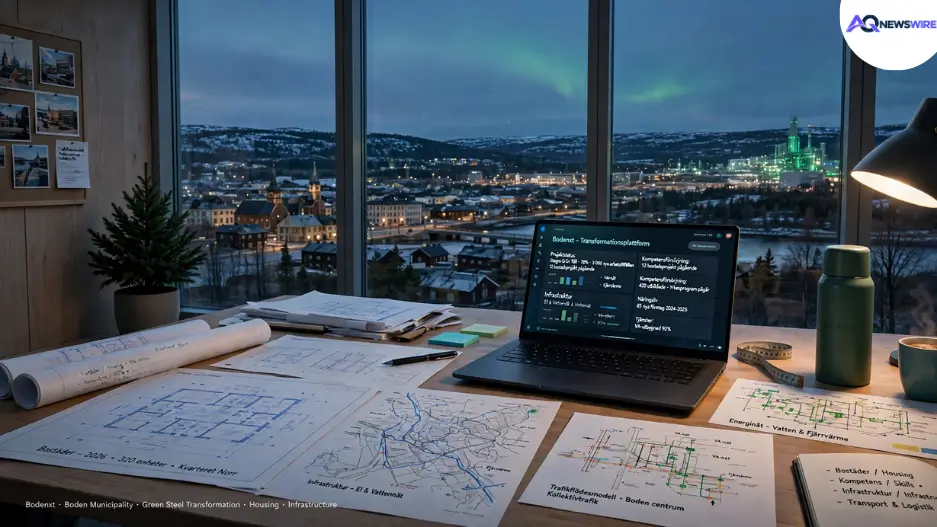
Rather than letting growth happen reactively, the municipality of Boden in northern Sweden introduced Bodenxt—an integrated strategic framework created to steer this monumental transition. Often misunderstood as a standalone private tech enterprise or a single commercial product, Bodenxt is actually a collaborative public-sector roadmap designed to harmonize green innovation, community expansion, workforce education, and infrastructural readiness.
Whether you are an urban planner, an investor tracking green energy corridors, or an economics researcher, this guide breaks down how the Bodenxt framework operates and why it serves as a global case study for sustainable municipal expansion.
The Catalyst: Why Bodenxt Was Created
To understand the necessity of Bodenxt, you have to look at northern Sweden’s green energy revolution. The region has become a magnet for heavy decarbonization projects—most notably Stegra (formerly H2 Green Steel), which is constructing a massive plant utilizing green hydrogen to produce carbon-free steel.
While a multi-billion-euro industrial plant brings thousands of direct and indirect jobs, it creates immediate logistical pressures:
The Housing Squeeze: An influx of engineers, construction crews, and technical specialists requires immediate residential accommodation.
Skills Gaps: Local labor markets need rapid upskilling and targeted vocational training to fill high-tech green manufacturing roles.
Infrastructure Strain: Roads, public transit, electrical grids, and water treatment systems must expand in tandem with industrial construction.
Bodenxt was established to prevent these challenges from turning into crises, ensuring that industrial progress benefits both corporate stakeholders and long-term local residents.
Core Pillars of the Bodenxt Framework
The strategic strength of Bodenxt lies in its systems-based approach. Instead of treating municipal sectors as isolated departments, the initiative binds four core pillars together:
| Development Pillar | Strategic Focus | Primary Community Goal |
| Housing & Community Life | Sustainable residential zoning, eco-friendly neighborhoods, and rapid housing delivery | Mitigating real estate shortages and keeping living costs stable for all residents. |
| Workforce & Skills Supply | Vocational training, school partnerships, apprenticeships, and international talent relocation | Equipping local citizens with high-paying career paths in clean tech industries. |
| Infrastructure & Utilities | Upgrading above-ground transit and subsurface networks (power, water, data) | Guaranteeing robust public utility capacity that handles heavy industrial and residential demand. |
| Business & Economic Growth | Industrial symbiosis, circular production ecosystems, and support for local small-to-medium enterprises | Fostering a diverse, resilient regional economy less vulnerable to single-sector shifts. |
Aligning Industrial Transition with Municipal Planning
Traditional economic development often relies on a fragmented approach: private companies build factories while local governments scramble to pave roads afterward. Bodenxt reverses this sequence by embedding municipal oversight directly into the planning phase.
Proactive Infrastructure Scaling: Both above-ground logistics (such as dedicated freight and rail corridors) and below-ground utility networks (fiber-optic data lines, district heating, and wastewater capacity) are scaled years ahead of full industrial operation.
Preventing Speculative Inflation: By streamlining housing delivery and opening new residential zones proactively, the municipality works to prevent real estate bubbles from pricing long-term residents out of the market.
Preserving Social Equity: A core ethos of the Bodenxt framework is that a green transition must also be a just and social transition—ensuring that rapid economic growth does not fracture community cohesion or degrade local quality of life.
Fostering Industrial Symbiosis and Circular Economies
Beyond managing population growth and housing, Bodenxt encourages a circular business mindset among local and incoming enterprises.
Industrial symbiosis is a key concept within the framework. In a circular industrial ecosystem, the waste product or excess energy generated by one facility becomes the raw input or heating source for another. For example, excess heat produced during green hydrogen and steel manufacturing can be redirected into municipal district heating grids or agricultural greenhouses. This systemic integration maximizes resource efficiency and drives down regional carbon footprints far beyond the factory gates.
Global Relevance: Can Other Cities Copy the Bodenxt Model?
As governments worldwide race to meet net-zero carbon targets, many industrial towns face the exact same paradox as Boden: massive green investments colliding with local housing shortages and infrastructure bottlenecks.
International urban planners and municipal leaders study the Bodenxt model because it offers a scalable blueprint for managing change:
Integrated Governance: Breaking down bureaucratic silos between housing boards, transit authorities, and economic development agencies.
Transparent Communication: Maintaining public trust through clear progress reports, realistic timelines, and active community engagement.
Long-Term Asset Thinking: Treating infrastructure investments not as short-term fixes, but as generational assets that secure community resilience.
Practical Takeaways for Sustainable City Development
Plan Before Growth Crises Hit: Waiting for an economic boom to create housing and traffic bottlenecks guarantees high costs and public friction.
Connect Education With Industry: Regional authorities must collaborate directly with technical schools to align curriculum with upcoming job market demands.
Embrace Systems Thinking: True sustainability requires balancing environmental targets with social equity and economic diversification.
Frequently Asked Questions
What is Bodenxt in simple words?
Bodenxt is a municipal development and coordination platform managed by Boden Municipality in northern Sweden to oversee rapid, green-driven economic growth.
Is Bodenxt a private tech company or a software product?
No. Bodenxt is not a private corporation, software application, or digital tool; it is a public-sector strategic planning framework.
Why was the Bodenxt initiative created?
It was created to manage the massive societal and logistical changes triggered by multi-billion-euro green industrial investments, such as Stegra's green steel plant.
What are the core pillars of the Bodenxt platform?
The initiative focuses on four main areas: housing and community development, workforce training and education, business growth, and modern infrastructure.
How does Bodenxt address the housing shortage?
By proactively opening sustainable residential zones, streamlining construction permits, and planning eco-friendly neighborhoods ahead of incoming workforce migration.
What role does workforce development play in the framework?
It connects industrial employers with vocational schools, apprenticeships, and upskilling programs to ensure local residents secure high-tech green jobs.
What is industrial symbiosis within this framework?
It is a practice where excess energy, materials, or waste from one industrial process are recycled and utilized as resources by another local enterprise or municipal utility.
Why is Bodenxt attracting international attention?
It serves as a successful global model showing how small municipalities can handle massive green industrial revolutions without sacrificing social equity or environmental health.
Does Bodenxt handle above-ground and below-ground infrastructure?
Yes. The initiative coordinates everything from visible transport networks (roads, railways, and cycle lanes) to essential subsurface utilities (water supply, drainage, and electricity grids).
Can other cities replicate the Bodenxt model?
Yes. Growing towns and cities worldwide facing rapid industrial transitions can adapt its integrated planning principles to balance economic growth with community well-being.