

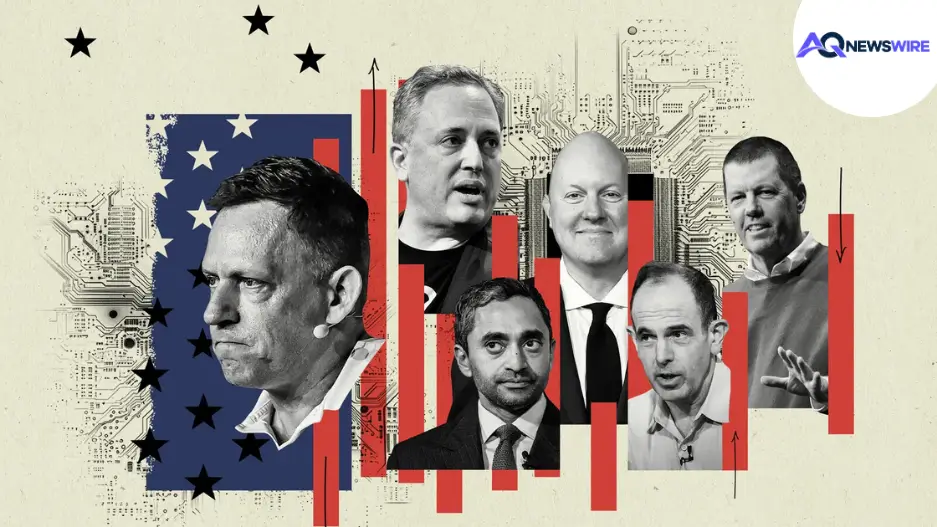
If you want to understand just how terrified California’s ultra-rich are of Dave Regan, look at Sergey Brin’s checkbook.
Brin, the Google co-founder with a net worth hovering around $270 billion, has written over $100 million in political checks this year alone. He didn’t cut those checks for a presidential campaign or a marquee Senate race. He poured that small fortune into a relentless blitz against Proposition 40, a California ballot initiative designed to slap a one-time 5% wealth tax on the state’s roughly 200 billionaires.
If Prop 40 passes, Brin is on the hook for an eye-watering personal tax bill of nearly $14 billion.
Yet for Dave Regan, the combative healthcare union leader who forced the measure onto the ballot, winning in California isn't the endgame. It's just the opening bell. Regan is already mapping out plans to export the wealth-tax crusade to states nationwide, turning Silicon Valley's worst nightmare into a coast-to-coast headache for the ultra-rich.
The Man Silicon Valley Can't Ignore
Regan isn't a novice taking wild swings. As head of SEIU-United Healthcare Workers West, he has spent years treating California’s direct-ballot system like a sledgehammer.
Back in 2016, he qualified a ballot initiative to raise the state’s minimum wage to $15 an hour. Rather than risk a humiliating, expensive public defeat at the ballot box, state lawmakers caved and passed the landmark wage increase themselves.
Now, he's running the exact same play, but the stakes are astronomical.
Regan points to massive holes in public healthcare funding—warning that California could lose $100 billion over the coming years as federal Medicaid support shrinks—to insist the cash has to come from somewhere. Under Prop 40, about 90% of the estimated $100 billion windfall goes straight into hospitals, clinics, and healthcare staffing, with the rest heading to public schools and food aid.
"When you have ordinary people sleeping in their cars outside emergency rooms while tech moguls sit on fortunes bigger than the GDP of entire countries, the system is fundamentally broken," Regan has argued. To him, taxing paper wealth and unrealized stock gains isn’t radical—it’s basic survival.
Panic in Atherton and Palo Alto
The prospect of taxing accumulated assets rather than regular yearly income has triggered genuine panic across Silicon Valley's most exclusive zip codes.
Opponents have dumped upwards of $185 million into fighting the initiative, shattering California campaign-spending records. Brin, former Google CEO Eric Schmidt, and crypto billionaire Chris Larsen have bankrolled a wall-to-wall onslaught of TV and digital ads warning that Prop 40 will drive innovators out of the state, crater tax revenues, and gut California's economic engine.
Brin, whose family fled the Soviet Union in the 1970s, has publicly blasted the measure as a dangerous government grab. Even prominent Democrats, including Governor Gavin Newsom and the leading contenders running to succeed him, have come out against it, warning that state-level asset taxes will simply send California’s biggest taxpayers packing for Florida or Texas.
Yet despite the record-breaking pushback, polls show the race in a virtual dead heat. For millions of Californians drowning in grocery bills and out-of-control rents, the idea of making 200 billionaires pick up the tab for public healthcare sounds like common sense.
A Playbook Going National
Win or lose on election day, Regan is already looking well beyond the California border.
The campaign machinery built for Prop 40 is being packaged as a turnkey blueprint for progressive labor groups in states like New York, Illinois, Washington, and Massachusetts—places with deep pockets of extreme wealth and chronically underfunded public services.
By sidestepping corporate-friendly state legislatures and taking the issue straight to voters through citizen-led ballot drives, Regan has built a weapon that keeps billionaires permanently on the defensive.
Even if the tech elite manages to kill the California tax this time, doing so cost them hundreds of millions of dollars. For union organizers, forcing billionaires to drain their fortunes just to protect their assets is half the point—it proves to everyday voters that enormous wealth will always buy political leverage unless someone steps up to fight it.
What started as a local tax spat has metastasized into a full-blown ideological brawl. If California's union activists manage to drag the world's richest people into a street fight over their bank accounts, America's billionaire class might soon realize there’s nowhere left to hide.



