

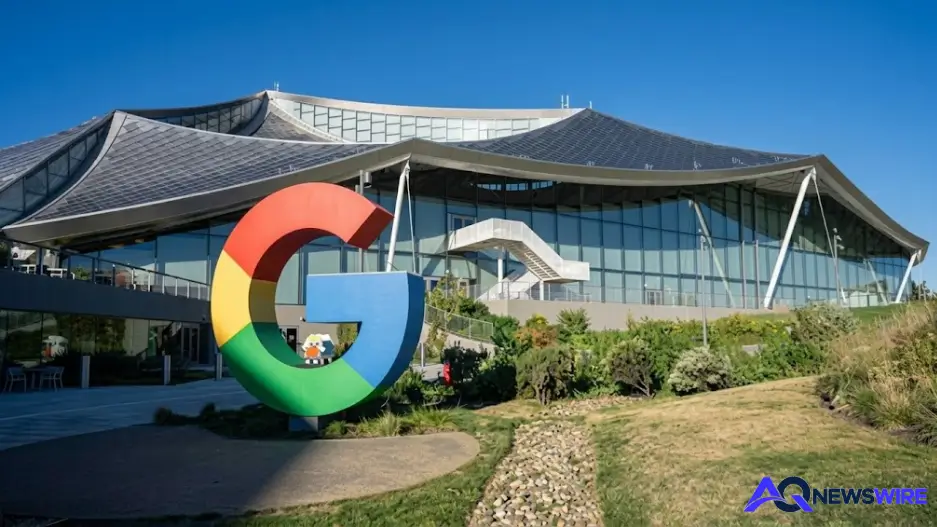
For years, Jim Cramer gave retail investors simple, consistent advice whenever the subject of Big Tech came up: own Alphabet, don’t trade it.
Lately, though, the Mad Money host has sounded remarkably different. While Google’s parent company remains an astonishingly profitable advertising powerhouse, Cramer has visibly run out of patience. Between an eye-watering capital spending spree on artificial intelligence, endless antitrust headaches in federal courtrooms, and vague timelines for when AI search overhauls will actually pay off, the stock is wearing thin on even its most loyal cheerleaders.
Instead of chasing Silicon Valley’s software promises, Cramer is pointing viewers toward a much less glamorous pocket of the market: classic American industrials.
Here is why Cramer is cooling on Alphabet—and what his latest updates on two industrial favorites, Eaton and GE Aerospace, say about where smart money is moving right now.
The Capex Spiral Haunting Alphabet
The main beef Cramer has with the Alphabet comes down to a single word: discipline.
Over the past four quarters, Big Tech hyperscalers have engaged in an all-out arms race to build out massive AI data hubs. They're snapping up high-end graphics chips by the truckload and pouring billions into concrete, networking gear, and power substations. Alphabet’s annual capital expenditures have ballooned to record levels, chewing through free cash flow and prompting increasingly tense questions on quarterly earnings calls.
Cramer's frustration isn't that Google is investing in AI—it's that shareholders are bankrolling an expensive, defensive war. Alphabet isn't spending tens of billions to break into unmapped territory; it's spending defensively to protect its core search advertising revenue from aggressive, fast-moving challengers like OpenAI and Anthropic.
Pile on lingering federal antitrust scrutiny over its ad tech business and default mobile search contracts, and the risk-reward setup suddenly looks messy. For Cramer, picking up a stock at a discount multiple doesn't mean much when management is locked in an open-ended capex spiral with no clear payoff date in sight
Industrial Pick No. 1: Eaton (ETN) – Selling the Picks and Shovels
If Cramer is skeptical of tech firms burning cash on hardware, he is unabashedly bullish on the companies that plug it all into the wall. That brings him directly to power management giant Eaton.
Eaton has quietly become one of the premier "picks-and-shovels" plays of the entire artificial intelligence boom. Modern AI server clusters consume staggering amounts of electricity—frequently as much as mid-sized cities. You can’t just plug racks of high-wattage computing cards into standard city outlets; you need custom transformers, switchgear, circuit breakers, liquid cooling systems, and industrial uninterruptible power supplies.
That hardware is precisely what Eaton manufactures.
In recent briefings to club members, Cramer emphasized that Eaton sits at the center of three massive, overlapping trends: the re-industrialization of North America, the overhaul of an aging national power grid, and the hyperscale data center boom. Backed by multi-year order backlogs and strong pricing power, Eaton doesn't carry the risk of technological obsolescence that keeps tech investors tossing and turning. Whether Google, Microsoft, or Amazon wins the AI search crown, every single one of them has to buy Eaton equipment to keep the lights on.
Industrial Pick No. 2: GE Aerospace (GE) – A Pure Cash-Flow Machine
The second industrial titan anchoring Cramer’s old-economy thesis is GE Aerospace, the commercial jet engine maker that emerged from General Electric’s historic three-way corporate breakup.
Unlike the clumsy, debt-heavy GE conglomerate of the past, GE Aerospace is a focused, high-margin aerospace pure-play. The underlying investment case is straightforward: the world is dealing with a severe, multi-year shortage of commercial passenger aircraft. Airlines simply cannot get new planes delivered fast enough from Boeing or Airbus, forcing carriers to keep older jets flying far longer than originally intended.
For GE Aerospace, those airline delivery delays are a gold mine.
The real margin in commercial jet engines doesn't come from selling the turbine itself—it comes from high-margin aftermarket maintenance, repair, and overhaul (MRO) contracts spanning decades. Every extra flight hour logged on an older CFM56 or next-generation LEAP engine means guaranteed, high-margin parts orders and scheduled shop visits.
Cramer points to GE Aerospace as the exact opposite of Alphabet’s current dilemma. While Google is pouring cash upfront into speculative future payoffs, GE Aerospace is generating predictable, contractually guaranteed cash flow right now, supported by an engine order book that stretches well into the 2030s.
The Bigger Market Takeaway
Cramer’s shift highlights an important transition playing out across Wall Street.
Investors are no longer handing out blank checks for generative AI promises. The market is demanding tangible execution, margin discipline, and cold hard cash. While Alphabet tries to prove that its massive infrastructure spend will eventually deliver for equity holders, industrials like Eaton and GE Aerospace are quietly delivering real cash flow today—proving that in an uncertain market, boring hardware can easily beat brilliant software.



