

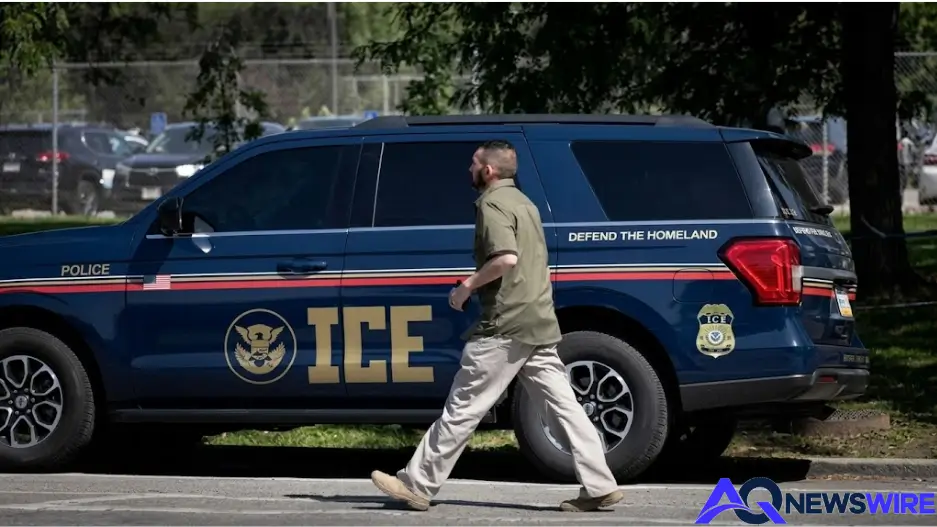
Once the black tactical SUVs roll out of town, the flashing lights disappear, and the cable news trucks pack up their satellite dishes, city hall is usually left staring down a completely different kind of crisis: an economic blackout.
In immigrant neighborhoods and working-class commercial strips from Minneapolis to Chicago and Southern California, aggressive federal immigration sweeps aren't just locking up workers—they are gutting the local economy. Months after federal agents leave, store aisles sit empty, restaurants struggle to fill tables, and small family shops that survived decades of rent hikes are quietly boarding up their windows.
What gets sold on the national campaign trail as swift law enforcement ends up hitting local main streets like an invisible, man-made recession.
The Chilling Effect in Hard Dollars
For years, politicians have argued over immigration enforcement almost purely in ideological terms—talking about borders, legal status, and federal authority. But an eye-opening study by Wharton professor Exequiel (Zeke) Hernandez, titled “ICE-ing the Economy,” tracked what actually happens to neighborhood cash registers when federal sweeps roll into town.
By examining anonymized cell phone location data, store receipts, and point-of-sale transactions across major metropolitan areas, the research uncovered an immediate collapse in foot traffic. Weekly visits to retail businesses plummeted by roughly 3%, while actual consumer spending tumbled more than 6%.
Across the country, that translates into an estimated 8 billion missing store visits and anywhere from $3 billion to $14 billion in lost consumer spending over a single year.
Crucially, the study blew up the comfortable theory that scared shoppers simply pull out their phones and order their groceries on Amazon or Instacart instead. They don’t. When people fear that walking out the front door might get them or a family member pulled into an unmarked van, they don't shift their spending online—they shut it down entirely.
People hoard whatever cash they have under the mattress, skip haircuts, put off buying winter coats, and live on dry beans and rice.
"The panic doesn’t just pack up and leave when the agents do," Hernandez pointed out. "The community stays on edge for six months, a year, sometimes longer. You essentially trigger a localized economic freeze."
Lake Street’s $700 Million Headache
Look at Minneapolis, where the Department of Homeland Security carried out an intense, multi-month enforcement campaign known as "Metro Surge."
Long after the federal agents finished their patrols, the damage on the ground was breathtaking. Municipal estimates put the overall economic loss across the city at roughly $700 million.
Along Lake Street—the beating heart of Minneapolis' immigrant small-business scene—shop owners were crushed. The Lake Street Council reported that small retailers, specialty grocers, and mom-and-pop eateries lost around $46 million in revenue in just eight weeks.
These weren't giant multinational chains with cash reserves in offshore accounts; they were immigrant entrepreneurs who had sunk every penny of their life savings into butcher shops, bakeries, and clothing boutiques. Independent grocery stores that had spent fifteen years anchoring commercial plazas saw their customer count drop by 60% almost overnight. Even if shoppers had legal status, the lingering rumor that federal vans might be watching the parking lot was enough to keep them away.
Why Everyone Else Foots the Bill
It’s tempting for folks outside these neighborhoods to assume the fallout stays confined to ethnic enclaves. But real-world economies don't work in tidy silos.
In Chicago, researchers found that when sweeps hit the city, the ripple effects drained over $1.2 billion in lost revenue from businesses in predominantly native-born, non-immigrant neighborhoods. The state of Illinois missed out on an estimated $107 million in lost sales tax revenue. Even a full year after the operations ceased, foot traffic had still failed to bounce back to normal levels.
The dominos fall fast. When immigrant families stop leaving the house, they aren't filling up at neighborhood gas stations, hiring local mechanics, or buying building supplies at the hardware store.
Meanwhile, construction sites, commercial bakeries, and dishwashing stations lose workers. When businesses can't find replacement labor on short notice, they start cutting back operating hours, canceling catering gigs, and turning away remodeling contracts. That forces owners to cut shifts for their native-born staff, too.
Fewer sales mean less tax revenue for city hall, leaving municipal governments with less money to fix potholes, keep parks clean, or fund public schools.
The True Ledger
As national politicians continue to treat immigration enforcement like a reliable applause line, the business owners left in the wreckage are asking for someone to finally look at the math.
Neighborhood economies are fragile, interconnected webs. Tearing through them with tactical gear might make for a tough headline on the evening news, but when the dust settles, it’s local shopkeepers, city budgets, and everyday taxpayers who are left paying the tab.



