

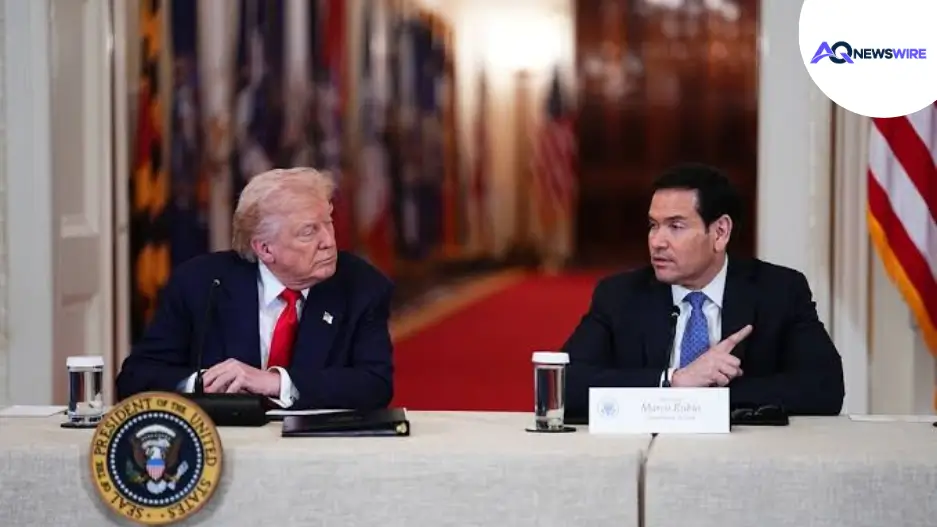
The United States stands at a volatile crossroads between renewed high-intensity military intervention and high-stakes backchannel diplomacy. Speaking at a press conference on the sidelines of diplomatic summits, U.S. Secretary of State Marco Rubio affirmed that President Donald Trump strongly favors concluding hostilities with Iran through peaceful and diplomatic avenues. However, Rubio simultaneously delivered an unambiguous warning: Washington possesses both the strategic capacity and operational readiness to execute comprehensive military objectives if Tehran rejects diplomatic off-ramps.
The Secretary’s statements underscore a precarious dual-track strategy unfolding in real time. While American delegations explore mediated communication tracks through Qatari intermediaries in Doha, defense intelligence reports indicate that both the Pentagon and the Islamic Republic are actively preparing contingency strike packages that could be triggered immediately following the U.S. midterm elections. The confrontation presents a stark dilemma for regional stability, global energy markets, and international security architecture.
The Rhetorical Tightrope: Strength and De-escalation
Rubio’s public remarks represent an effort to project calculated deterrence while keeping the door open for an off-ramp. Addressing international reporters, the Secretary of State stressed that the White House has not yet finalized any operational directive regarding renewed strikes on Iranian soil.
"He hasn’t made a decision. I have no announcement in that regard with you today, and nor do we take any of it lightly," Rubio explained. "What the president expresses to you is incredible confidence that if we needed to do something militarily, we would have the ability to do it and we have everything we need to be successful. But we would prefer to do it peacefully".
Rubio’s comments directly reflect President Trump’s recent public posture. In parallel media appearances, the president struck a more combative tone, declaring that the protracted regional confrontation would be resolved "one way or the other" in short order. "Either they'll make a deal, or we'll just end it," Trump stated, framing the current diplomatic pause as an ultimatum rather than an indefinite grace period.
Rubio contextualized Washington’s red lines by pointing directly to regional maritime security and nuclear non-proliferation. The administration continues to insist that any durable framework must permanently shut down Tehran’s nuclear enrichment capabilities and halt proxy operations targeting international shipping corridors. Rubio criticized Iranian negotiating tactics, asserting that Tehran's geopolitical leverage relies on threatening global maritime chokepoints and civilian energy networks across neighboring states.
Behind Closed Doors: The Doha Mediation Channel
Despite hardline public pronouncements, high-stakes diplomatic mechanisms remain active behind the scenes. Diplomatic reports reveal that Qatari intermediaries in Doha have facilitated indirect exchanges between American envoys and Iranian representatives.
The primary hurdle in these talks remains a fundamental sequencing impasse:
The American Position: Washington demands verifiable freezes on uranium enrichment, immediate cessation of drone and missile exports to regional proxy networks, and guarantees of unhindered maritime transit through the Strait of Hormuz before sanctions relief can be considered.
The Iranian Counter-Demand: Tehran maintains that international sanctions crippling its civilian economy must be rolled back first, alongside security guarantees precluding preemptive strikes on its sovereign defensive installations.
The Intermediary Role: Qatari diplomats have circulated draft frameworks proposing phased de-escalation, where incremental maritime deconfliction is rewarded with targeted exemptions for humanitarian trade and localized oil transit allowances.
While Rubio declined to characterize whether measurable breakthroughs were achieved over the weekend, he reiterated that Washington has not set an arbitrary deadline on mediated negotiations. However, defense analysts caution that the diplomatic clock is ticking against a fast-approaching political calendar.
Post-Midterm Maneuvers: The Military Clock Ticks
While diplomats hold discussions in Gulf capitals, military positioning across the Middle East indicates that operational preparations are advancing at scale. Defense planning has increasingly aligned with the conclusion of the U.S. midterm elections, an inflection point after which domestic political sensitivities typically give way to strategic realignments.
Multiple Western intelligence disclosures indicate that the Pentagon has updated targeted strike options designed to degrade Iranian ballistic missile launch pads, drone production complexes, and air-defense radar networks if talks collapse. Forward-deployed carrier strike groups, stealth fighter wings, and regional aerial defense batteries across allied Gulf installations have been placed on heightened rotational readiness.
Simultaneously, Tehran is preparing for defensive and asymmetric mobilization. Iranian military command structures have warned that any renewed breach of its territory will trigger an instantaneous, expansive retaliatory doctrine. Iranian leadership has instructed its armed forces to counter any external threat with a geographically unrestricted operational response, signaling that Gulf infrastructure, naval logistics lanes, and allied installations could become fair game in a wider conflagration.
Adding to the diplomatic friction, Tehran officially designated British military intelligence a hostile organization, escalating diplomatic friction with European allies and complicating multilateral diplomatic coordination.
Strategic Friction: The Core Disconnect
The fundamental challenge confronting Rubio’s diplomatic pitch lies in the vast chasm between both nations' minimum baseline conditions.
U.S. Strategic Demands: - Complete and permanent halt to weaponizable nuclear enrichment - Formal termination of anti-ship ballistic strikes in the Persian Gulf and Red Sea - Verifiable cessation of funding and arming regional paramilitary proxies Tehran's Core Demands: - Binding relief from Western financial and commercial energy sanctions - Non-aggression assurances protecting domestic nuclear infrastructure - Recognition of its sovereign defensive missile posture without precondition
This divide highlights why many foreign policy strategists remain skeptical of an enduring breakthrough. To accept Washington’s core terms, Tehran would be forced to abandon the foundational tenets of its external deterrence strategy. Conversely, for the White House to compromise on nuclear oversight or maritime protection would invite severe domestic pushback and alienate allied regional capitals.
Energy Markets and Economic Reverberations
The delicate balance between Rubio’s peaceful rhetoric and actual operational readiness has triggered volatility across international commodities markets. Energy benchmarks have fluctuated with every headline emerging from Doha and Washington.
When rumors of diplomatic progress surfaced early in the week, crude futures dipped as risk premiums were momentarily reduced. However, energy desks recognize that any physical interruption to commercial tanker traffic in the Strait of Hormuz—through which roughly 20% of global petroleum transit flows—would instantly disrupt supply pipelines.
Prolonged maritime insecurity has already driven up commercial war-risk insurance rates across Gulf shipping routes. A shift from diplomatic negotiations into direct kinetic strikes would threaten vital refining assets, port terminals, and export infrastructure, potentially triggering an oil price shock capable of driving global headline inflation back upward.
Regional Dynamics: Gulf Allies on Alert
Washington’s regional allies are watching the diplomatic signaling with acute attention. Gulf Cooperation Council (GCC) member states find themselves caught between their security architecture, which relies on American defense guarantees, and their direct geographic exposure to retaliatory strikes.
Governments across Saudi Arabia, the United Arab Emirates, and Qatar have intensified regional diplomacy, urging Washington to exhaust every peaceful channel before authorizing kinetic action. While these nations share American concerns regarding ballistic missile proliferation, they also recognize that any widespread conflict would inevitably bring drone strikes and infrastructure sabotage directly onto their own soil.
Consequently, Gulf capitals have actively facilitated the Doha talks, seeking to establish a durable framework that prevents their airspace from becoming a theater for open warfare.
The Verdict: Diplomacy Under the Shadow of the Gun
Marco Rubio’s insistence that Donald Trump prefers a peaceful resolution underscores Washington’s awareness of the immense economic and human costs associated with a full-scale Middle Eastern conflict. Yet, framing diplomacy alongside constant reminders of overwhelming military firepower illustrates the limits of conventional statecraft when core national security interests collide.
The current dynamic is a strategy of brinkmanship. Washington is attempting to use the credible threat of imminent force to extract significant concessions from a defiant Iranian leadership. Meanwhile, Tehran is betting that the White House will hesitate to launch a regional conflict that could upend domestic economic conditions.
With the midterms passing and operational assets in place, the window for negotiated solutions is narrowing rapidly. Whether Rubio’s diplomatic preference materializes into an actionable treaty or gives way to a major military confrontation will be determined by the decisions made in Washington and Tehran in the coming days.
Frequently Asked Questions
What did Marco Rubio say about Donald Trump’s stance on Iran?
Secretary of State Marco Rubio stated that President Donald Trump prefers to resolve the Iran conflict peacefully and diplomatically, though he emphasized that Trump has not yet made a formal decision regarding military strikes and that the U.S. possesses full military readiness to act if required.
Has President Trump ordered new military strikes against Iran?
No formal decision or operational order has been announced. Rubio confirmed that options remain open while diplomatic channels are evaluated.
Why are experts focusing on the period after the U.S. midterm elections?
Historically, significant military actions and foreign policy maneuvers are often deferred until major domestic election cycles conclude, avoiding immediate domestic political complications while allowing strategic realignments.
Where are the current diplomatic talks taking place?
Indirect diplomatic discussions and message exchanges have been hosted in Doha, with Qatari officials mediating negotiations between American and Iranian interlocutors.
What are the United States' primary demands in the negotiations?
Washington is demanding a permanent freeze on Iran's nuclear enrichment capabilities, an end to attacks on commercial shipping in the Persian Gulf and Red Sea, and the cessation of support for armed regional proxy groups.
How has Iran responded to the threat of renewed U.S. strikes?
Iran's leadership has directed its military forces to prepare for an immediate, impactful, and geographically unrestricted response to any external military provocation or strike.
Why did Iran designate British military intelligence as a hostile group?
Tehran labeled U.K. military intelligence a hostile group amid accusations of Western intelligence operations, foreign interference, and espionage in the region.
How is the crisis impacting global oil markets?
The threat of military strikes and disruptions to the Strait of Hormuz has created volatility in global crude markets, elevating insurance rates for commercial oil tankers and raising concerns over global supply shocks.
What role are Gulf allies like Qatar and Saudi Arabia playing?
Gulf nations are advocating for diplomatic de-escalation and facilitating talks, seeking to prevent a regional war that could damage neighboring critical infrastructure and trade networks.
Can a diplomatic deal still be reached before military action occurs?
Diplomatic channels remain open, and Qatari-mediated proposals are in circulation. However, deep divisions over sanctions relief and nuclear security leave the timeline for a peaceful resolution constrained.