

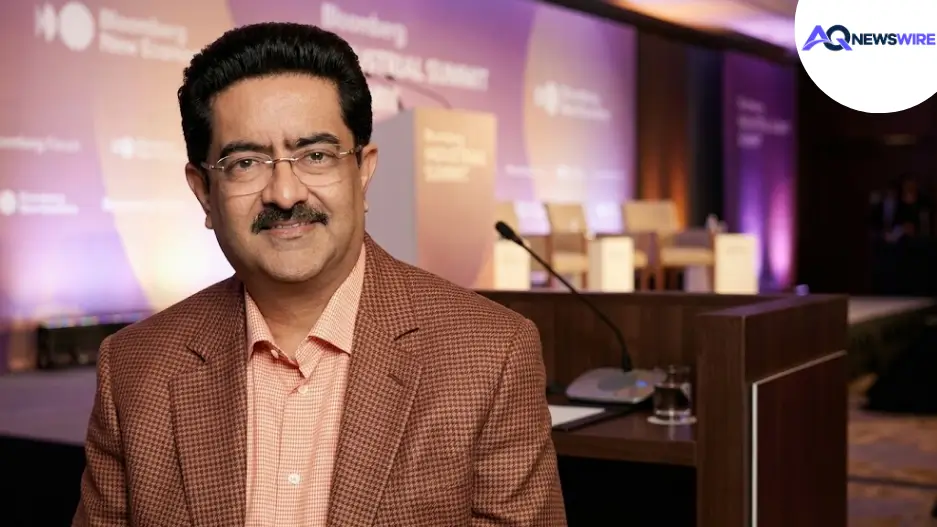
In an era marked by shifting macroeconomic tides, escalating geopolitical friction, and rapid technological disruption, navigating capital deployment has turned into an increasingly complex balancing act for global conglomerates. Addressing industry leaders and policymakers at the Bloomberg New Economy Forum, Kumar Mangalam Birla, Chairman of the Aditya Birla Group, noted that making sound investment decisions has grown distinctly harder as competing demands for capital surge.
Despite these headwinds, the industrialist underscored an unrelenting operational reality for large-scale enterprise: pausing expansion is not an option.
The Imperative of Growth Against Mounting Demands
Leading a diversified multinational with deep footprints across metals, cement, textiles, telecom, and financial services, Birla highlighted that businesses face unprecedented competition for internal capital resources. Traditional core operations require ongoing modernization, while new-economy imperatives demand substantial, sustained financial commitments.
"You can't stop growing," Birla observed during a panel discussion, encapsulating the pressure confronting modern corporate leadership. In his view, stagnation represents an existential threat: organizations either continue expanding their scale or risk rapid decline. However, determining where each dollar should flow has become far more demanding as balance sheets are called upon to absorb shifting global supply chains, higher baseline capital costs, and volatile international regulatory environments.
Geopolitics and Fragmented Global Commerce
A major contributor to this heightened complexity is the fragmenting geopolitical landscape. For decades, multinational corporations built long-range capital expenditure strategies around predictable international trade pacts, open borders, and uninterrupted logistics corridors.
Today, that architecture is being rewritten in real time. Cross-border enterprises must factor in heightened trade protectionism, localized supply security, and divergent regulatory standards across jurisdictions. For multinational groups operating in dozens of countries, these geopolitical realignments add persistent risk premiums to long-dated infrastructure and manufacturing projects, forcing executives to stress-test projects against potential border restrictions and supply shocks.
To withstand these cycles, Birla emphasized that operational endurance relies on fundamental cost leadership. In manufacturing verticals, maintaining a position within the lowest decile of the global cost curve provides the vital buffer needed to survive external volatility, ensuring that massive capital projects retain their viability even during downturns.
Reining in AI Hype: Shifting from FOMO to Measured ROI
The growing difficulty of capital allocation is especially evident in corporate technology spending. While enterprises worldwide have spent the past several quarters rushing to secure artificial intelligence compute power and digital infrastructure, Birla cautioned against pouring capital into emerging technologies out of anxiety rather than clear commercial logic.
Reflecting on corporate sentiment around generative technology, Birla noted that the initial climate was driven heavily by the "fear of missing out" (FOMO), where leadership teams feared catastrophic disruption if they failed to commit massive budgets immediately. Today, that perspective is maturing into a more disciplined, return-on-investment framework.
Rather than aggressive, indiscriminate rollouts, the conglomerate is adopting a more deliberate, measured pace for AI capital allocation. Birla pointed out that genuine value creation varies widely across sectors: AI applications can boost manufacturing floor efficiencies, optimize lending margins in financial services, or enhance customer engagement channels. Because building out enterprise-scale AI architecture requires immense outlays, decisions must be governed by demonstrable returns rather than speculative momentum.
A Disciplined Playbook for Uncertain Times
The broader message from the summit signals a structural transition in how corporate titans approach expansion. The era of low-friction global trade and cheap capital has yielded to a climate where every major investment requires far greater scrutiny.
Yet, far from advocating retreat, Birla’s outlook reflects a pragmatic strategy: fortify balance sheets through cost discipline, evaluate disruptive technologies strictly on economic merit, and maintain long-term capital momentum despite external volatility. For modern enterprises navigating an unpredictable global landscape, agility and disciplined capital deployment will separate durable industry leaders from those left behind.



