

For as long as most people can remember, clean energy in Washington has been treated like a predictable culture-war script. Democrats treated solar panels like moral trophies, Republicans dismissed them as over-subsidized green toys, and the whole conversation reliably bogged down in partisan eye-rolling.
Then the US power grid slammed into a wall.
Between artificial intelligence data centers guzzling megawatts like water, domestic battery plants coming online, and factories humming across the Heartland, America’s appetite for juice is surging for the first time in a generation. And the person now running Washington's biggest solar trade group isn't an environmental activist in hiking boots—it’s Tim Pawlenty, the former two-term Republican governor of Minnesota.
As head of the Solar Energy Industries Association (SEIA), Pawlenty’s pitch to lawmakers isn’t about saving the polar bears. It’s about keeping the lights on before America’s tech boom runs out of juice.
Forget the Sermons, We Need Megawatts
"Americans, all of us, need more energy, and we need it to be affordable," Pawlenty recently pointed out. "And increasingly, we need it to be clean."
Notice the order of those words. Affordability and raw volume come first; green credentials come second.
That shift in language is intentional. Right now, utilities are scrambling. Big Tech companies are demanding gigawatts of power for massive AI server farms, and they want it yesterday. If you decide to build a new natural gas turbine or a state-of-the-art nuclear reactor, you’re looking at five to fifteen years of bureaucratic purgatory before flipping a switch.
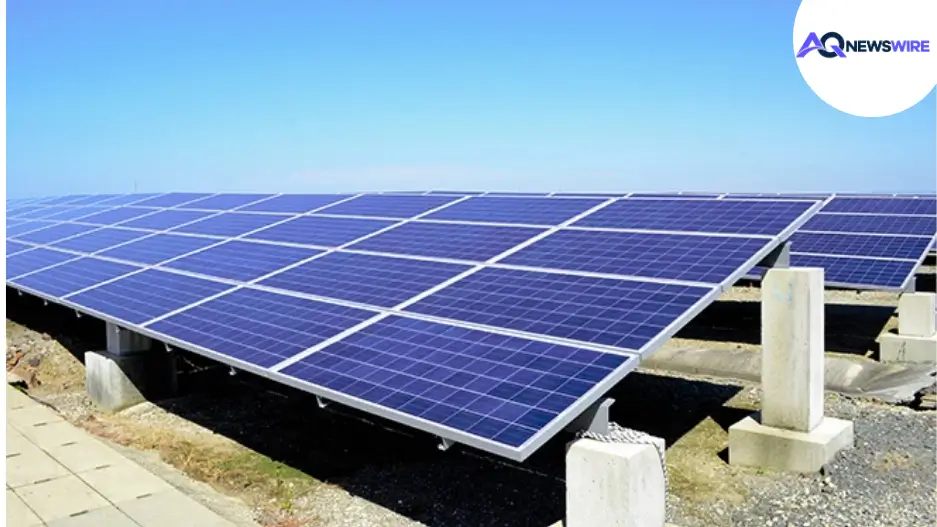
Solar and utility-scale battery storage, on the other hand, can be permitted, financed, and plugged into the ground in a fraction of that time. During the first half of this year alone, solar and batteries accounted for roughly 70% of all brand-new electricity capacity added to the entire US grid. The nation now has enough solar generation to power over 50 million homes.
When you're facing a looming blackout crisis, you stop caring about political aesthetics. You just buy whatever can be built the fastest.
The Red-State Irony
Pawlenty’s political background is his superpower in this fight. Whenever partisan hardliners on Capitol Hill threaten to rip up clean-energy tax incentives or slap crippling blanket tariffs on components, they run into an awkward geographic reality: the solar revolution is happening in deeply conservative territory.
Texas routinely blows past California in new solar generation. Giant manufacturing plants are pouring concrete in places like Georgia, Ohio, and South Carolina.
"If you walk through these towns, nobody is talking about climate ideology," Pawlenty has observed. "You’re talking to family farmers who are saving the multi-generational homestead with solar lease checks. You’re talking to county commissioners funding local schools with new commercial tax revenue, and workers clocking in at advanced manufacturing facilities. Once an industry creates real livelihoods in your backyard, keeping it healthy just becomes basic common sense."
That gives the industry a completely different kind of muscle. Pawlenty isn't begging for favors; he’s reminding lawmakers that gutting solar policies means killing blue-collar jobs in their own voting districts.
The Real Enemy: Bureaucratic Quicksand
Even with market momentum on its side, the solar industry is tripping over a massive, homegrown hurdle: red tape.
Right now, the biggest problem isn't making cheaper panels or raising private cash—it's getting permission to plug into the wall. Gigawatts of completed or fully funded solar projects are stuck in multi-year "interconnection queues," idling while regional grid operators crawl through archaic paperwork. Meanwhile, building the high-voltage transmission lines needed to shuttle cheap solar from sunny rural plains into crowded metro areas is tied up in endless federal and state lawsuits.
Pawlenty has put permitting reform right at the top of his agenda. His argument to both sides of the aisle is straightforward: if America wants to beat global rivals in AI and advanced manufacturing, letting energy projects rot in legal limbo is economic suicide.
A Seat at the Grown-Up Table
Having an establishment Republican running SEIA proves how dramatically the energy landscape has shifted. Solar is no longer an idealistic outsider scraping by on government handouts. It has become the workhorse of America’s grid expansion.
Pawlenty's mission is simply to get Washington to catch up with what the private market has already figured out: the country is starving for power, and solar is the only thing ready to feed it right now.



