

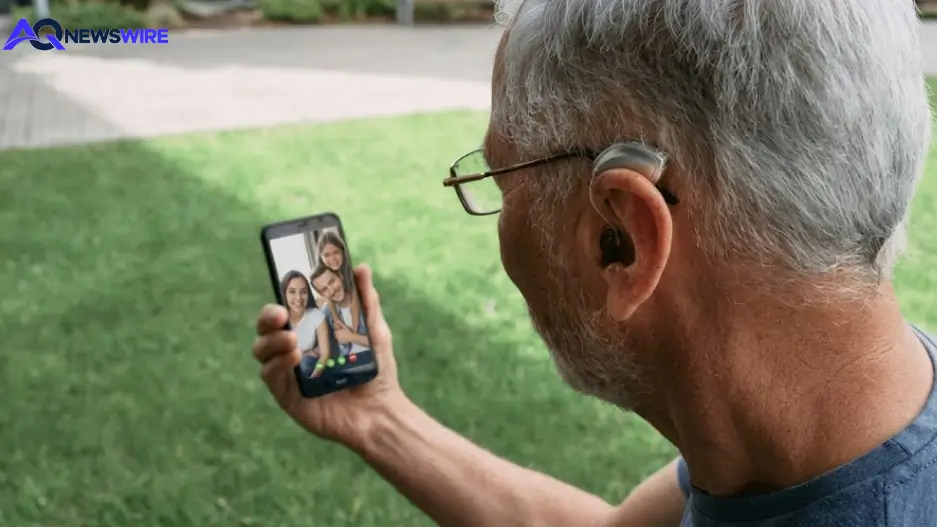
For as long as most of us can remember, the hearing aid had an awful reputation.
Mention one, and everyone pictured the same thing: an awkward, beige plastic banana hooked behind an elderly relative's ear, whistling every time someone leaned in for a hug. It screamed "old age," and people hated it so much that they routinely waited seven to ten years after their ears first started failing before stepping foot in a clinic. They preferred missing half of every dinner conversation over wearing that plastic badge of aging.
That era has officially come to an end.
Today, the hearing health market has quietly blown past $9.7 billion, headed toward a projected $18 billion over the next decade. What used to be a dusty, clinical niche cornered by specialized medical distributors has morphed into one of the most exciting battlegrounds in wearable tech.
Between an aging global population, groundbreaking neuroscience linking hearing loss directly to dementia, and modern designs that make hearing devices look cooler than standard wireless earbuds, hearing care has finally come in from the cold.
The Brain Connection: It’s Not Just About Your Ears
The biggest engine behind this commercial boom isn't vanity—it's fear of cognitive decline.
For years, people treated hearing loss like bad eyesight: an annoying inconvenience you could ignore simply by cranking up the TV volume or nodding along when you couldn't hear someone. But landmark clinical studies—most famously from Johns Hopkins and The Lancet Commission on dementia—shattered that complacency.
Researchers discovered that even mild, untreated hearing loss doubles the risk of developing dementia. Moderate to severe impairment pushes that risk up three- to fivefold.
The reason comes down to cognitive bandwidth. When your inner ear sends scrambled, garbled sound into your brain, your gray matter has to work overtime just to decode words. That constant, exhausting strain robs resources from the memory and executive function centers. Add to that the social isolation that happens when people stop going out because noisy restaurants give them a headache, and you get accelerated brain tissue shrinkage
Suddenly, getting your hearing checked isn't an admission of getting old; it’s an active defense against losing your sharp edge. Forty-somethings are now booking audiology screenings with the same routine seriousness they give to annual cholesterol and blood pressure checks.
Goodbye Medical Beige, Hello Silicon Valley
At the same time, the hardware sitting in your ears has gone through a massive upgrade.
Engineers have spent recent years stripping away everything people hated about legacy devices:
Neural Sound Processors: Tiny onboard chips run dedicated neural networks trained on millions of real-world soundscapes. Instead of blindly cranking the volume on everything in a room—including clattering plates and screaming espresso machines—they instantly isolate human speech and quiet the background roar in real time.
Virtually Invisible Fits: The bulky plastic hooks have yielded to featherlight receiver-in-canal (RIC) designs connected by hair-thin, transparent acoustic wires. Completely-in-canal (CIC) models sit so deep inside the ear canal that you can't even see them from the side.
Full Smartphone Integration: Today's devices stream Spotify playlists, take hands-free phone calls over Bluetooth LE Audio, and link directly to Auracast feeds in airport terminals, theaters, and lecture halls.
When slipping on a hearing device feels and looks identical to popping in high-end wireless audio gear, the old social embarrassment disappears completely.
Tearing Down the Dispensary Walls
The other major catalyst came from regulatory reform.
Historically, getting a hearing aid felt like buying a used car: you had to visit a specialized dispenser, sit through multiple clinical tests, and shell out anywhere from $4,000 to $7,000 out-of-pocket for bundled services you might never use.
When the U.S. FDA launched the Over-the-Counter (OTC) Hearing Aid category—followed by similar deregulation across Europe and Asia—it blew the doors off the industry. Suddenly, anyone with mild-to-moderate hearing trouble could walk into a local pharmacy or hop online and buy self-fitting, app-calibrated devices for $600 to $1,500.
Mainstream tech giants immediately seized the opening. Consumer audio brands and smartphone makers rolled out software updates that turn everyday earbuds into FDA-cleared hearing aids, putting clinical-grade hearing tests straight into phone settings and normalizing ear care for hundreds of millions of users worldwide.
A Market That's Barely Scratched the Surface
Even with revenues approaching $10 billion, the industry is just getting started.
The World Health Organization estimates that more than 1.5 billion people worldwide live with hearing decline, a number expected to hit 2.5 billion by mid-century. Yet globally, fewer than 20% of people who could benefit from a hearing device actually wear one. In developing countries, that number drops into the single digits.
As preventative neurology converges with sleek consumer tech, hearing care has pulled off a rare feat: turning a once-dreaded clinical disability into an essential, high-tech upgrade for daily life.



