

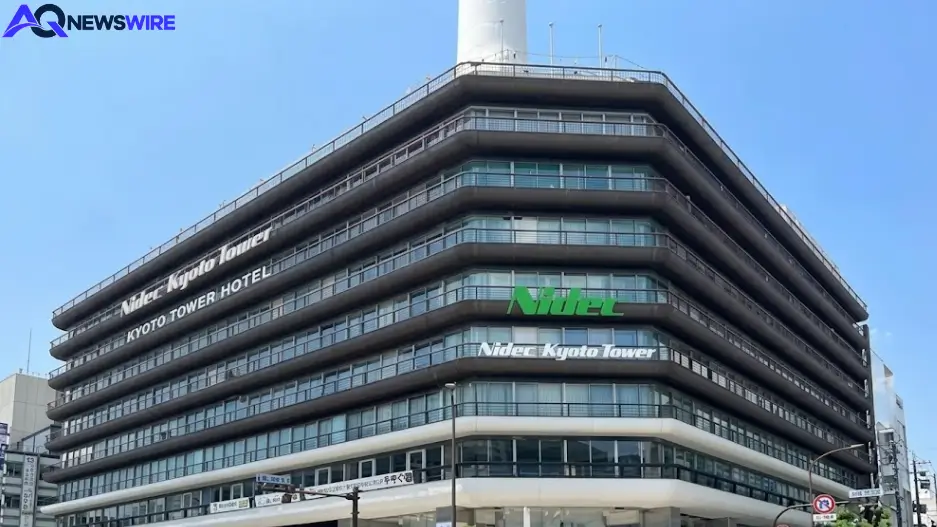
For five decades, Nidec Corp. was held up as one of Japan’s ultimate industrial success stories: a scrappy Kyoto motor maker that grew into an indispensable global powerhouse supplying precision hardware for electric vehicles, hard drives, and industrial robots.
Now, one of Asia's most prominent activist hedge funds is telling the company that its time as a public business is up.
Hong Kong-based Oasis Management, led by veteran investor Seth Fischer, has sent a blunt proposal to Nidec’s board urging the manufacturer to take itself private through an outright sale or management buyout (MBO). The activist’s warning was unvarnished: fix a spiraling accounting scandal and persistent board failures behind closed doors, or risk seeing the Tokyo Stock Exchange step in to delist the stock entirely.
Accounting Red Flags and Delisting Scares
The catalyst for Oasis’s intervention isn't just sluggish share performance—it’s basic accounting credibility.
Over recent months, Nidec has found itself in the crosshairs of regulators and external auditors over how it accounts for overseas revenues, inventory valuations, and asset impairments. The inquiries triggered embarrassing delays in filing mandatory financial reports, a development that instantly spooks institutional investors in Tokyo.
In its letter to the board, Oasis warned that without immediate, credible third-party intervention, the Tokyo Stock Exchange could place Nidec's shares under formal supervision or start delisting proceedings—a move that would instantly wipe out billions in retail and institutional savings.
Oasis pointed out that the company’s internal controls have broken down under pressure to deliver flawless quarter-on-quarter growth, arguing that independent board members have acted more like rubber stamps than genuine fiduciaries.
The Founder’s Shadow
To understand how Nidec got here, you have to look at Shigenobu Nagamori, the charismatic billionaire who founded the company in a Kyoto shed back in 1973.
Nagamori built an empire through hard-nosed discipline, an unrelenting work ethic, and dozens of overseas acquisitions. But as the founder entered his late 70s and early 80s, succession planning turned into a revolving door. Over the past several years, high-profile outside executives were recruited to take over as CEO, only to be publicly sidelined or pushed out within months after clashing with Nagamori over performance metrics and decision-making power.
Insiders and governance analysts have long warned that this setup created a climate of intense fear: when hitting executive targets is the only thing that keeps your job safe, the pressure to massage numbers and gloss over regional losses becomes immense. Oasis argues that this exact dynamic set the stage for today's reporting mess.
Why Buyout Funds Are Circling
Despite the boardroom drama, Nidec’s underlying business is still a crown jewel of global manufacturing.
Its electric motors power everything from high-end data center cooling pumps to electric vehicles and factory robotics. It holds thousands of critical patents and runs an expansive manufacturing footprint that would cost tens of billions to replicate.
That makes Nidec an incredibly tempting target for private equity giants with billions in unspent Asian dry powder. Oasis argues that taking the company private is the cleanest way out of the mess because it allows management to:
Overhaul its internal books: Fix enterprise software and accounting practices without answering to quarterly public earnings panics.
Prune unprofitable divisions: Offload lower-margin legacy businesses accumulated over decades of acquisitions.
Finally resolve leadership: Establish a professional management team and succession plan completely independent of founder interference.
A Litmus Test for Corporate Japan
The fight landed at a pivotal moment for Japanese finance. The Tokyo Stock Exchange and the Financial Services Agency have spent several years pressuring domestic boards to stop ignoring minority shareholders, dismantle protective cross-holdings, and treat capital efficiency seriously.
If Nidec's special committee actually moves forward with a privatization review, it would trigger one of the largest buyout transactions in Japanese corporate history.
Nidec says its board will evaluate the shareholder’s communication. But the clock in Kyoto is ticking: the company can either overhaul its governance out in the open, or hand the keys over to private capital.



