

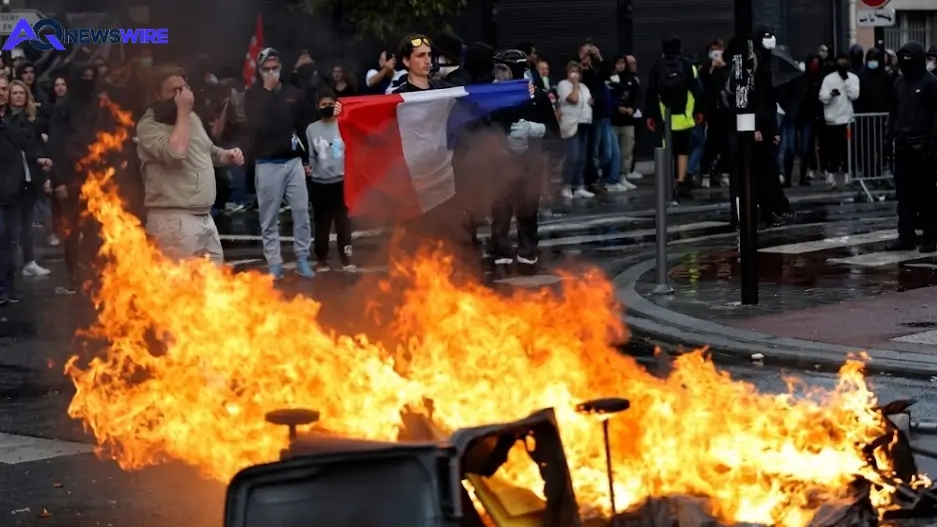
When French high school students start dragging trash bins into the boulevard and setting them on fire, politicians in Paris know trouble has arrived.
For the past week, a rapidly spreading student revolt has shut down hundreds of lycées across the country, snarling city centers from Paris and Lille to Marseille. At the very same moment, French drivers have watched prices on roadside fuel boards creep toward €2.36 a liter, squeezing household budgets that were already stretched to the limit.
Cornered by street anger and nervous financial markets, Prime Minister Sébastien Lecornu pulled an emergency lever: France is opening its strategic petroleum reserves to release 10 million barrels of diesel over the next three months.
The fuel will be offloaded to private distributors at cost, with the government predicting the move should knock roughly 12 to 18 euro cents off the price of a litre.
On paper, it looks like a direct consumer relief measure. In reality, it’s an emergency patch on an economy fighting a two-front war: an explosive domestic uprising over public spending cuts, and an unforgiving sovereign debt market that refuses to give the French government any room to maneuver.
Cold Classrooms and Stun Grenades
The protests didn't start over the price of gas. They started inside crumbling school buildings.
For weeks, students and teachers have staged walkouts to protest what they call decades of neglect in public education: broken heating systems heading into winter, packed lecture halls, and severe staff shortages that leave classes unattended for weeks. The anger reached a boiling point after teenagers realized the government’s upcoming budget was doubling down on austerity rather than fixing their schools.
Tensions turned ugly earlier this week when a 15-year-old student lost his hand after a police stun grenade exploded during a clash outside a school gate.
The injury prompted fury across the political spectrum. Accusations of police brutality forced the Interior Ministry to announce an immediate ban on the use of stun grenades for crowd control. But backing down didn't clear the streets—it threw fuel on the fire. Student unions declared an open-ended mobilization, and on Thursday alone, more than 200 high schools were partially or fully blockaded.
The Bond Market Trap
If this were five or six years ago, a French government facing street riots would simply open the state checkbook, pass emergency subsidies, or promise billions in educational grants to calm the storm.
Today, Lecornu cannot do that. His hands are tied by the bond market.
The prime minister is currently trying to push a brutal €43 billion package of spending cuts and tax measures through an unstable, divided parliament. Bond traders in London and Frankfurt have grown visibly worried about France’s ballooning deficit and political gridlock. Yields on France’s benchmark 10-year bonds have climbed toward 4.9%, and the extra risk premium France must pay compared to Germany has nearly doubled.
If Lecornu borrows another €5 billion to hand out fuel checks or placate student unions, international investors will dump French debt, driving borrowing costs even higher and triggering an outright fiscal crisis.
That’s why releasing physical barrels of diesel from underground storage looks so appealing:
Zero New Debt: It delivers immediate supply to filling stations without adding a single euro to the national deficit.
Tamps Down Inflation: Shaving 15 cents off fuel helps keep logistics costs from bleeding into grocery store receipts.
Defuses Commuter Rage: It prevents rural commuters and logistics drivers from joining forces with the urban students.
International Crosscurrents
The crisis at the pump isn't entirely made in Paris.
European diesel supplies have been hit by an ugly collision of outside shocks: shipping bottlenecks around the Persian Gulf, damage to refining capacity, and aggressive demands from the White House urging European allies to draw down stockpiles to head off potential export restrictions. France’s 10-million-barrel move fits into a wider, coordinated G7 push to mobilize up to 100 million barrels of fuel globally.
Yet for all the barrels being pushed into distribution pipelines, cheap fuel won't rebuild a dilapidated high school in Marseille.
Student leaders have already made it clear that knocking 15 cents off a tank of diesel won't stop their campaign. They want an emergency funding bill for education, guarantees on class sizes, and an end to Lecornu's broader spending-cut push.
By opening the strategic diesel valves, the French government bought itself a little breathing room at the gas station. But with winter setting in, borrowing costs lingering near crisis highs, and thousands of teenagers still manning the barricades, Sébastien Lecornu is finding out the hard way: it’s a lot easier to release emergency oil than it is to cool down a country on the verge of boiling over.



