

Donald Trump doesn’t sound like a man ready to shake hands on a Middle East truce.
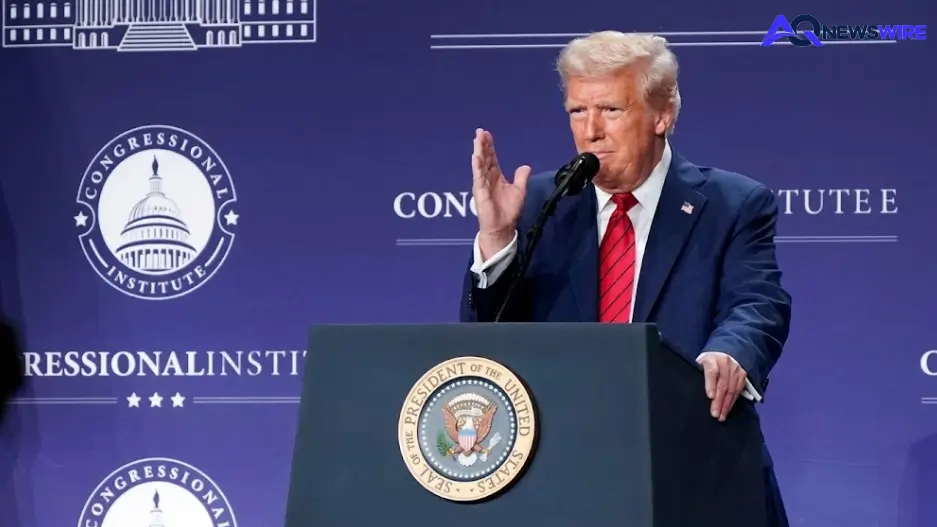
Taking the stage before a roaring crowd in San Antonio, Texas, the president gave an update on backchannel negotiations with Tehran—and almost immediately took a hammer to the idea of signing on the dotted line.
While Trump gave a tip of the hat to his special envoy Steve Witkoff, praising him as a "great negotiator" working hard on the file, he made it abundantly clear that he isn't buying what Iran is selling.
"He's working on the Iran deal and doing very well," Trump told the audience. "I think the deal isn't really something that I want to do, but they're willing to offer us anything to stop."
He repeated his baseline red line—promising Tehran will "never have a nuclear weapon"—before adding that he expects the broader conflict to wrap up on an expedited timeline. "That war ends—it’s going to be very soon. It’s got to be very soon," he said, labeling Iran "a failed nation."
The political swagger lands at a perilous moment. Across the Potomac, the Pentagon isn't waiting around for a handshake. The White House has formally asked military planners to flesh out operational options for a renewed wave of strikes against Iranian targets—missions that could be launched before voters head to the polls for the November 3 midterm elections.
The Paper Truce That Never Took Hold
To see how we arrived back at the brink, you have to look at the fragile status quo that has held the Middle East together over the summer.
Ever since open combat broke out on February 28 between Iran, Israel, and the United States, the region has been trapped in a destructive cycle. Tehran responded to Western assaults with waves of ballistic missiles and drone salvos, choking maritime transit through the Strait of Hormuz—the narrow transit point through which roughly 20 percent of global petroleum flows.
A temporary memorandum of understanding brokered in June through Qatari and Pakistani intermediaries managed to pause the worst of the shooting. But the agreement has been bleeding out ever since. Disagreements over secure navigation in the Gulf, mutual inspections, and regional proxy networks have turned what was supposed to be a permanent off-ramp into a diplomatic dead end.
Now, with talks stalled and projectile attacks continuing to threaten commercial shipping—including a tanker crew injured in the Strait just this week—the White House is running out of patience.
What’s on the Target List
Behind closed doors, U.S. Central Command has been drafting plans that go far beyond symbolic warning shots.
If Trump signs an execute order, military planners are looking at a campaign designed to gut Iran's remaining military capacity:
The Nuclear Footprint: Buried enrichment cascades and laboratory complexes at Natanz, Fordow, and Isfahan that survived earlier strikes.
Energy Choke Points: Critical oil hubs like Kharg Island, which bankrolls what remains of Iran's battered state budget.
Coastal Battery and Drone Sites: The radar networks, fast-attack boat bases, and anti-ship missile launchers that the Revolutionary Guard uses to harass commercial tankers in the Gulf.
Military officials stress that no final launch date is locked in. But drawing up active flight paths and strike packages before the midterms signals to allies—especially an aggressive Israeli security cabinet—that Washington is willing to abandon the diplomatic track entirely if Tehran doesn't cave.
The Domestic Political Gamble
The timing of the saber-rattling couldn't be tighter.
With the midterms less than a month away, foreign policy decisions are directly tied to voter anxiety back home. Trump wants to look uncompromising, tough, and decisive against a long-time adversary. His base loves the defiant rhetoric, and showing overwhelming kinetic power fits his political playbook.The risk, as always, is energy math.
Iran may be reeling, but it still has the asymmetrical capability to shut down tanker traffic in the Persian Gulf. If renewed U.S. airstrikes turn the Strait of Hormuz into a shooting gallery, global crude prices will spike overnight. A sudden jump at the gas pump two weeks before an election is the nightmare scenario for any incumbent party trying to defend legislative majorities.
For now, Trump is using the threat of bunker-busters as his ultimate negotiating leverage. He wants the world to believe he is perfectly comfortable walking away from the table and letting the bombers fly. Whether that posture forces Tehran into total surrender—or sparks a regional explosion that upends global markets—is a gamble with virtually zero margin for error.



