

When the United States slammed the gate shut on Chinese electric cars with 100% tariffs and Brussels rolled out punitive levies climbing up to 45%, Britain decided to look the other way.
Ministers in London had an ambitious net-zero schedule to hit and a brutal cost-of-living crisis on their hands. Raising trade walls would only make clean cars more expensive for ordinary families. So while the rest of the Western world was putting up barricades, the UK kept the ports wide open.
For a little while, it felt like an easy win. Forecourts across Britain filled up with practical, well-equipped battery-powered hatchbacks and crossovers from brands like BYD, Chery, and SAIC-owned MG. Models that would have set buyers back £40,000 from European brands were suddenly rolling off dealer lots for closer to £25,000.
Now, the bill for that decision is coming due.
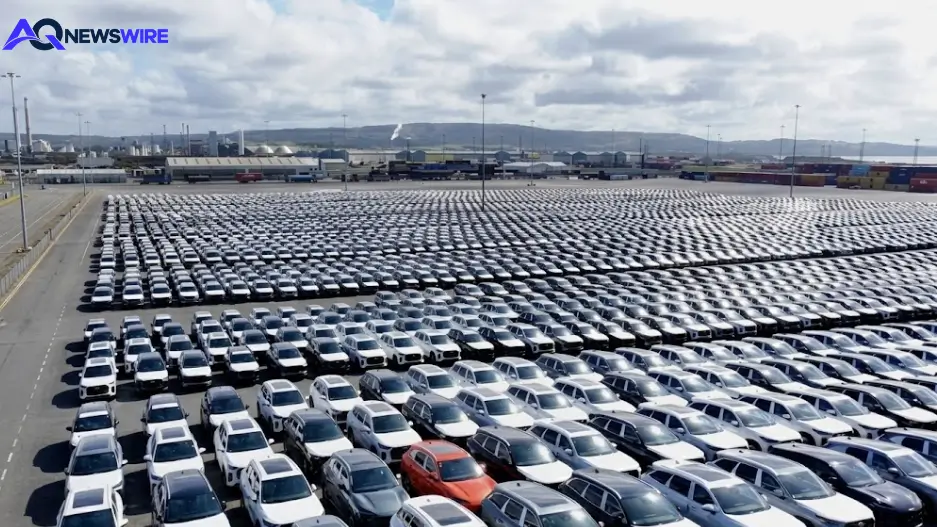
With American and European doors locked tight, Chinese carmakers have diverted ship after ship of unsold inventory straight to British ports. What started as welcome price competition has morphed into a ruthless race to the bottom that is tearing through domestic manufacturing plants, unsettling post-Brexit trade pacts with Brussels, and forcing Keir Starmer’s government into a corner where someone has to lose.
The ZEV Trap
To understand why British factories are in trouble, you have to look at the UK’s Zero Emission Vehicle (ZEV) mandate.
The rules are unforgiving. Under the law, carmakers selling in the UK have to hit rigid sales quotas: at least 22% of all new cars sold had to be fully electric in 2024, rising toward 28% in 2025, and marching toward a total ban on pure petrol and diesel cars by 2030. If an automaker falls short, the government hits them with a staggering £15,000 fine for every non-compliant vehicle sold.
For domestic mainstays like Stellantis, Ford, Nissan, and Jaguar Land Rover, hitting those numbers without setting fire to their balance sheets is turning into a nightmare. They’re still carrying the costs of retooling old engine plants, paying higher domestic wages, and buying expensive European batteries.
Chinese automakers, meanwhile, don't have those problems. Backed by years of heavy state support, fully integrated mineral supply chains, and massive vertical scale, they can turn a profit on electric cars at price points that would put Western factories out of business.
Because of that cost gap, Chinese brands have been snapping up market share. That leaves Western rivals with two terrible options: slash their own sticker prices to money-losing levels just to hit the quota, or face tens of millions in government penalties.
The Factory Floor Warning
The alarm bells are ringing loudest in places like Sunderland, Ellesmere Port, and Solihull.
The UK auto industry isn't just another business sector—it supports over 800,000 jobs across vehicle assembly, parts manufacturing, and engineering hubs. If those plants can't survive the margins being dictated by imported cars, the ripple effects will hollow out entire regional economies.
Stellantis, which builds electric vans in Ellesmere Port and Luton, has already publicly warned ministers that rigid quotas paired with unchecked foreign imports could force it to rethink whether it can keep manufacturing in the UK at all.
And the headache doesn't stop at the English Channel. Under the post-Brexit trade deal, cars built in the UK need to meet strict local-parts thresholds to cross into Europe without paying customs duties. If Britain becomes an open clearinghouse for foreign-made components while European factories shut them out, Brussels has made it clear that UK-assembled cars could be shut out of the "Made in Europe" club—hitting British exports with retaliatory European tariffs.
The Hybrid Loophole
Faced with mounting panic from auto executives and dealerships, Whitehall officials are quietly hunting for an off-ramp.
One idea gaining momentum is tweaking the ZEV mandate to give more regulatory breathing room to plug-in hybrids (PHEVs) and extended-range vehicles. Hybrids would act as an emergency shock absorber: they cut emissions compared to straight petrol engines, but they give Western manufacturers a lifeline while they try to get battery costs down to competitive levels.
Predictably, environmental campaigners are furious at the thought of softening the rules. They argue that diluting the 2030 target simply protects legacy automakers from adapting, while denying British drivers the massive long-term fuel savings of driving pure EVs.
A Stark Choice in Whitehall
Downing Street is running out of track.
If ministers follow Washington and match Europe’s 45% tariffs, they protect domestic factory jobs and stop Brussels from locking British exports out of the single market. But doing so will instantly hike the price of electric cars, pushing green mobility out of reach for working-class drivers and wrecking the government's own climate targets.
If they leave the docks wide open, EV adoption will boom, but British car plants risk being reduced to empty shells.
Car carriers are arriving at British docks every week with thousands more vehicles on board. Britain bet that it could fast-track a green transport transition on the back of cheap foreign supply—now it has to figure out if it's willing to sacrifice its own industrial base to pay for it.



