

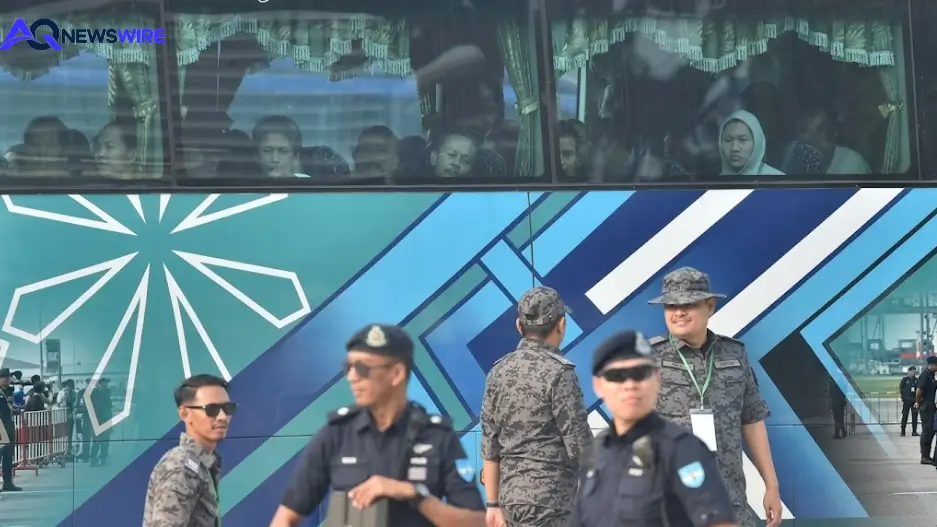
When three navy transport ships pulled away from Malaysia’s western docks and set course for Yangon, it kicked off one of the most contentious, morally fraught diplomatic maneuvers in Southeast Asia this year.
By Sunday, the flotilla carrying nearly 1,500 Myanmar nationals had arrived in Thanlyin, docking quietly at a junta-run naval facility just south of the commercial capital. State television in Myanmar celebrated the arrival as routine diplomacy, noting that thousands of citizens have made the voyage home over the past twelve months.
Behind the polished state announcements, human rights monitors, United Nations officials, and refugee families are sounding the alarm. They warn that Malaysia is packing thousands of vulnerable people—many of whom fled political purges, relentless airstrikes, and forced military drafts—onto ships and delivering them directly into the hands of a desperate military regime fighting an unyielding civil war.
The shipment marks the first phase of an opaque deal struck between Kuala Lumpur and Naypyitaw to return roughly 5,000 detainees. For Malaysian authorities, it is an aggressive show of border enforcement to placate a restless domestic electorate. For the men and women forced up the gangplanks, it looks less like a homecoming and more like a trip to the frontline.
Returning to a Burning House
The timing of these deportations could hardly be worse.
Ever since the military seized power in the February 2021 coup, Myanmar has been tearing itself apart. Allied ethnic resistance forces and civilian anti-junta militias have pushed the military into a defensive corner, stripping the generals of vast swaths of border territory. In response, the junta has turned to scorched-earth tactics, pounding towns with indiscriminate artillery and rolling airstrikes. Independent monitors at ACLED estimate the post-coup conflict has already claimed over 100,000 lives.
Worse still, earlier this year the military activated a sweeping conscription law, allowing press-gangs to grab young men and women off the street to replenish depleted combat units.
For the people rounded up in Malaysian immigration sweeps—spanning Chin Christians, Karen minorities, and Muslim Rohingya—getting handed over at a military naval dock carries terrifying, immediate risks:
Forced Drafts: Anyone of fighting age faces being pressed into frontline combat duty against their own communities
Political Retaliation: Anyone suspected of joining the Civil Disobedience Movement (CDM) or supporting resistance groups faces brutal interrogation, torture, and indefinite detention in notorious facilities like Insein Prison.
The Rohingya Nightmare: For the displaced Rohingya—who are legally denied citizenship, freedom of movement, and basic rights in their homeland—being returned amounts to being trapped in an active humanitarian catastrophe.
UN High Commissioner for Human Rights Volker Türk put it bluntly: "This is no time to return anyone forcibly to a country plagued by egregious human rights violations and abuses."
The Legal Void in Kuala Lumpur
To understand how 1,500 people end up on military transport ships, you have to look at Malaysia’s domestic law.
Malaysia never signed the 1951 UN Refugee Convention. In the eyes of Malaysian domestic law, there is zero distinction between an asylum seeker fleeing mortar shells and an economic migrant who overstayed a tourist visa. Without formal legal recognition, anyone lacking paperwork is treated as an illegal immigrant, liable to be arrested, locked in an immigration depot, and deported.
More than 215,000 refugees and asylum seekers are registered with the UNHCR in Malaysia, the overwhelming majority from Myanmar. Yet for five years, Malaysian authorities have locked UN officials out of immigration detention depots, preventing caseworkers from screening detainees, verifying asylum claims, or pulling vulnerable people from deportation manifests.
As of late August, Malaysian holding centers held over 11,800 Myanmar nationals. While the government insists every single returnee volunteered to go back, grassroots advocates on the ground describe a coerced reality. Stuck inside squalid, overcrowded cells with barely enough food or medical care, many detainees sign voluntary repatriation papers just to escape the depot walls—hoping they can somehow slip away once they reach Myanmar soil.
The Political Calculations
The rush to empty these detention centers isn't happening by accident. It is being fueled by shifting politics in Malaysia.
Squeezed by stubborn inflation and slow wage growth, public attitudes toward refugees and undocumented workers have noticeably hardened. Social media campaigns targeting migrant communities have picked up steam, scapegoating refugees for straining public clinics, taking blue-collar jobs, and driving petty crime.
For Prime Minister Anwar Ibrahim's government, visibly packing thousands of migrants onto ships offers a blunt, headline-grabbing way to demonstrate border control.
Yet international jurists point out that domestic political pressures do not override basic legal boundaries. The bedrock principle of non-refoulement under customary international law explicitly forbids countries from returning anyone to a place where they face a credible threat of torture, persecution, or execution.
A Community in Hiding
As those three navy vessels discharge their passengers into military processing buses in Thanlyin, the panic has already spread through migrant communities across Kuala Lumpur and Penang.
Informal community schools have gone dark as parents keep their kids barricaded inside cramped apartments, terrified that a run to the market will trigger an identity check. Casual laborers are staying off construction sites and restaurant kitchens, weighing the risk of missed wages against the prospect of being loaded onto the next ship out.
Kuala Lumpur may have temporarily trimmed its detention center headcount, but it has done so by pushing hundreds of families back into an active war zone with nowhere left to run.



